

ISBN: 978-80-244-6650-7 | ISBN online: 978-80-244-6651-4, 978-80-244-6652-1 | DOI: 10.5507/pdf.25.24466507
Komorebi: Interdisciplinární perspektivy embodimentu a expresivních terapií
- Martin Dominik Polínek, Michal Růžička, Lenka Terezie Růžičková, Pavlína Sitařová, Karolína Tvarůžková
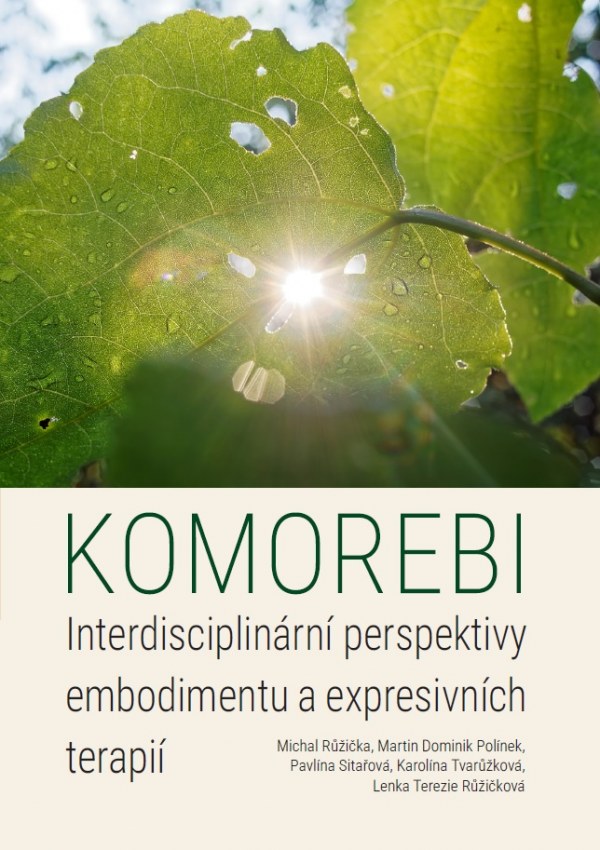
Komorebi is a Japanese term for the play of light and shadow through the moving leaves of trees. This phenomenon –whether latent or fully manifested – permeates both the theoretical and practical chapters of the book. Movement and the awareness of the constant transformation of our perception of both the light and shadow aspects of ourselves, rootedness in physicality and presence, as well as the connection with other dimensions of human existence within the concept of embodiment, form Ariadne’s thread through the labyrinth of approaches, methods, and theories presented in the book. The publication is intended for professionals in the fields of psychology, psychotherapy, and special education, as well as for anyone seeking inspiration in the connection between the body, movement, mindfulness, creativity, and personal growth within the helping professions.
1. edition, Published: 2025, online: 2025, publisher: Univerzita Palackého v Olomouci, Křížkovského 8, 771 47 Olomouc
 |  |  |  |
References
- Aizik-Reebs, A., Shoham, A., & Bernstein, A. (2021). First, do no harm: An intensive experience sampling study of adverse effects to mindfulness training. Behaviour Research and Therapy, 145, 103941. https://doi.org/10.1016/j.brat.2021.103941
 Go to original source...
 - Anālayo, B. (2019). The Insight Knowledge of Fear and Adverse Effects of Mindfulness Practices. Mindfulness, 10(10), 2172-2185. https://doi.org/10.1007/s12671-019-01198-4 Go to original source...
- Beaty, R. E., Seli, P., & Schacter, D. L. (2019). Network Neuroscience of Creative Cognition: Mapping Cognitive Mechanisms and Individual Differences in the Creative Brain. Current Opinion in Behavioral Sciences, 27, 22-30. https://doi.org/10.1016/j.cobeha.2018.08.013 Go to original source...
- Beerse, M. E., Van Lith, T., & Stanwood, G. (2020). Therapeutic psychological and biological responses to mindfulness-based art therapy. Stress and health : journal of the International Society for the Investigation of Stress, 36(4), 419-432. https://doi.org/10.1002/smi.2937 Go to original source...
- Berghs, M., Prick, A.-E. J. C., Vissers, C., & van Hooren, S. (2022). Drama Therapy for Children and Adolescents with Psychosocial Problems: A Systemic Review on Effects, Means, Therapeutic Attitude, and Supposed Mechanisms of Change. Children (Basel, Switzerland), 9(9), 1358. https://doi.org/10.3390/children9091358 Go to original source...
- Binda, D. D., Greco, C. M., & Morone, N. E. (2022). What Are Adverse Events in Mindfulness Meditation? Global Advances in Health and Medicine, 11, 2164957X221096640. https://doi.org/10.1177/2164957X221096640 Go to original source...
- Blanck, P., Perleth, S., Heidenreich, T., Kröger, P., Ditzen, B., Bents, H., & Mander, J. (2018). Effects of mindfulness exercises as stand-alone intervention on symptoms of anxiety and depression: Systematic review and meta-analysis. Behaviour Research and Therapy, 102, 25-35. https://doi.org/10.1016/j.brat.2017.12.002 Go to original source...
- Boggio, P. S., Giglio, A. C. A., Nakao, C. K., Wingenbach, T. S. H., Marques, L. M., Koller, S., & Gruber, J. (2020). Writing about gratitude increases emotion-regulation efficacy. The Journal of Positive Psychology, 15(6), 783-794. https://doi.org/10.1080/17439760.2019.1651893 Go to original source...
- Boldsen, S. (2022). Autism and the Sensory Disruption of Social Experience. Frontiers in Psychology, 13. https://doi.org/10.3389/fpsyg.2022.874268 Go to original source...
- Britton, W. B., Lindahl, J. R., Cooper, D. J., Canby, N. K., & Palitsky, R. (2021). Defining and measuring meditation-related adverse effects in mindfulness-based programs. Clinical Psychological Science: A Journal of the Association for Psychological Science, 9(6), 1185-1204. https://doi.org/10.1177/2167702621996340 Go to original source...
- Butler, J. D. (2012). Playing with madness: Developmental Transformations and the treatment of schizophrenia. The Arts in Psychotherapy, 39(2), 87-94. https://doi.org/10.1016/j.aip.2012.01.002 Go to original source...
- Calota, I. (2020). Playful workshop toolkit for professionals working with children. In Routledge International Handbook of Play, Therapeutic Play and Play Therapy. Routledge. Go to original source...
- Cebolla, A., Miragall, M., Palomo, P., Llorens, R., Soler, J., Demarzo, M., García-Campayo, J., & Baños, R. M. (2016). Embodiment and Body Awareness in Meditators. Mindfulness, 7(6), 1297-1305. https://doi.org/10.1007/s12671-016-0569-x Go to original source...
- Cimini, A. (2012). Vibrating Colors and Silent Bodies. Music, Sound and Silence in Maurice-Merleau-Ponty's Critique of Dualism. Contemporary Music Review, 31(5-6), 353-370. https://doi.org/10.1080/07494467.2012.759411 Go to original source...
- Crooks, A., & Mensinga, J. (2021). Body, Relationship, Space: Dance Movement Therapy as an Intervention in Embodied Social Work With Parents and Their Children. Australian Social Work, 74(2), 250-258. https://doi.org/10.1080/0312407X.2020.1861315 Go to original source...
- Daniel, S., Wimpory, D., Delafield-Butt, J. T., Malloch, S., Holck, U., Geretsegger, M., Tortora, S., Osborne, N., Schögler, B., Koch, S., Elias-Masiques, J., Howorth, M.-C., Dunbar, P., Swan, K., Rochat, M. J., Schlochtermeier, R., Forster, K., & Amos, P. (2022). Rhythmic Relating: Bidirectional Support for Social Timing in Autism Therapies. Frontiers in Psychology, 13. https://doi.org/10.3389/fpsyg.2022.793258 Go to original source...
- de Witte, M., Orkibi, H., Zarate, R., Karkou, V., Sajnani, N., Malhotra, B., Ho, R. T. H., Kaimal, G., Baker, F. A., & Koch, S. C. (2021). From Therapeutic Factors to Mechanisms of Change in the Creative Arts Therapies: A Scoping Review. Frontiers in Psychology, 12, 1-27. https://doi.org/10.3389/fpsyg.2021.678397 Go to original source...
- Dobkin, P. L. (2011). Mindfulness and Whole Person Care. In T. A. Hutchinson (Ed.), Whole Person Care: A New Paradigm for the 21st Century (s. 69-82). Springer. https://doi.org/10.1007/978-1-4419-9440-0_7 Go to original source...
- EADMT. (2010). What is Dance Movement Therapy (DMT)? EADMT. https://eadmt.com/what-is-dance-movement-therapy-dmt
- Ewais, T., Begun, J., Kenny, M., Rickett, K., Hay, K., Ajilchi, B., & Kisely, S. (2019). A systematic review and meta-analysis of mindfulness based interventions and yoga in inflammatory bowel disease. Journal of Psychosomatic Research, 116, 44-53. https://doi.org/10.1016/j.jpsychores.2018.11.010 Go to original source...
- Fink, A., & Benedek, M. (2013). The Creative Brain: Brain Correlates Underlying the Generation of Original Ideas. In O. Vartanian, A. S. Bristol, & J. C. Kaufman (Ed.), Neuroscience of Creativity (s. 0). The MIT Press. https://doi.org/10.7551/mitpress/9780262019583.003.0010 Go to original source...
- Fink, A., & Benedek, M. (2019). The Neuroscience of Creativity. Neuroforum, 25(4), 231-240. https://doi.org/10.1515/nf-2019-0006 Go to original source...
- Fuchs, T., & Schlimme, J. E. (2009). Embodiment and psychopathology: A phenomenological perspective. Current Opinion in Psychiatry, 22(6), 570-575. https://doi.org/10.1097/YCO.0b013e3283318e5c Go to original source...
- Gabbard, G. O. (2000). A neurobiologically informed perspective on psychotherapy. The British Journal of Psychiatry, 177(2), 117-122. https://doi.org/10.1192/bjp.177.2.117 Go to original source...
- González-Martín, A. M., Aibar-Almazán, A., Rivas-Campo, Y., Castellote-Caballero, Y., & Carcelén-Fraile, M. del C. (2023). Mindfulness to improve the mental health of university students. A systematic review and meta-analysis. Frontiers in Public Health, 11, 1284632. https://doi.org/10.3389/fpubh.2023.1284632 Go to original source...
- Grawe, K. (2007). Neuropsychoterapie: Nové přístupy k terapii na základě poznatků neurovědy (Vyd. 1). Portál.
- Hauke, G., & Kritikos, A. (2018). Embodiment in psychotherapy: A practitioner's guide. Springer. Go to original source...
- Holmwood, C. (2020). Neuro-Dramatic-Play and a hero's journey: A play-based approach in a UK junior school. In Routledge International Handbook of Play, Therapeutic Play and Play Therapy. Routledge. Go to original source...
- Holmwood, C. (2021). Older people, dementia and neuro-dramatic-play: A personal and theoretical drama therapy perspective. Drama Therapy Review, 7(Older Adults), 61-75. https://doi.org/10.1386/dtr_00061_1 Go to original source...
- Howard, S. J. (2016). Mindfulness may have risks as well as benefits. Journal of the Royal Society of Medicine, 109(7), 259. https://doi.org/10.1177/0141076816644113 Go to original source...
- Chodorow, J., Govine, B., Gould, S., & Verebes, A. (1999). Honoring and Remembering Trudi Schoop. American Journal of Dance Therapy, 21(2), 113-116. https://doi.org/10.1023/A:1022108704098 Go to original source...
- Chung, E., Cromby, J., Papadopoulos, D., & Tufarelli, C. (2016). Social epigenetics: A science of social science? The Sociological Review Monographs, 64(1), 168-185. https://doi.org/10.1002/2059-7932.12019 Go to original source...
- Jaenisch, R., & Bird, A. (2003). Epigenetic regulation of gene expression: How the genome integrates intrinsic and environmental signals. Nature Genetics, 33(3), 245-254. https://doi.org/10.1038/ng1089 Go to original source...
- Jennings, D. S., Lahad, P. M., & McCarthy, D. (2011). Healthy Attachments and Neuro-Dramatic-Play. Jessica Kingsley Publishers.
- Johnston, L. (2001). (Other) bodies and tourism studies. Annals of Tourism Research, 28(1), 180-201. https://doi.org/10.1016/S0160-7383(00)00012-8 Go to original source...
- Joly-Mascheroni, R., Abad-Hernando, S., Forster, B., & Calvo-Merino, B. (2021). Embodiment and Multisensory Perception of Synchronicity: Biological Features Modulate Visual and Tactile Multisensory Interaction in Simultaneity Judgements. https://doi.org/10.1163/22134808-bja10020 Go to original source...
- Kabat-Zinn, J. (2016). Život samá pohroma: Jak čelit stresu, nemoci a bolesti pomocí moudrosti těla a mysli (L. Válek, Přel.). Jan Melvil Publishing.
- Khalil, R., & Demarin, V. (2023). Creative therapy in health and disease: Inner vision. CNS Neuroscience & Therapeutics, 30(3), e14266. https://doi.org/10.1111/cns.14266 Go to original source...
- Koch, S., & Fischman, D. (2011). Embodied Enactive Dance/Movement Therapy. American Journal of Dance Therapy, 33, 57-72. https://doi.org/10.1007/s10465-011-9108-4 Go to original source...
- Koch, S., & Fuchs, T. (2011). Embodied arts therapies. Arts in Psychotherapy - ART PSYCHOTHER, 38, 276-280. https://doi.org/10.1016/j.aip.2011.08.007 Go to original source...
- Konopatsch, I., & Payne, H. (2012). Chapter 21. The emergence of body memory in Authentic Movement. In S. C. Koch, T. Fuchs, M. Summa, & C. Müller (Ed.), Body Memory, Metaphor and Movement (s. 341-352). John Benjamins Publishing Company. https://doi.org/10.1075/aicr.84.25kon Go to original source...
- Krieger, N. (2005). Embodiment: A conceptual glossary for epidemiology. Journal of Epidemiology & Community Health, 59(5), 350-355. https://doi.org/10.1136/jech.2004.024562 Go to original source...
- Kuhn, T. S. (1997). Struktura vědeckých revolucí (1. vyd). OIKOYMENH.
- Laban, J. de. (1974). Trudi Schoop with Peggy Mitchell. Won't You Join the Dance? A Dancer's Essay into the Treatment of Psychosis. Palo Alto: National Press Books, 1974, 194 pages, $8.95. Dance Research Journal, 6(2), 54-54. https://doi.org/10.1017/S058873560059085X Go to original source...
- Leder, D. (1984). Medicine and Paradigms of Embodiment. The Journal of Medicine and Philosophy: A Forum for Bioethics and Philosophy of Medicine, 9(1), 29-44. https://doi.org/10.1093/jmp/9.1.29 Go to original source...
- Lerner, R. M., & Benson, J. B. (2013). Chapter One - Introduction: Embodiment and Epigenesis: A View of the Issues. In R. M. Lerner & J. B. Benson (Ed.), Advances in Child Development and Behavior (Roč. 45, s. 1-20). JAI. https://doi.org/10.1016/B978-0-12-397946-9.00001-4 Go to original source...
- Martin, L. A. L., Koch, S. C., Hirjak, D., & Fuchs, T. (2016). Overcoming Disembodiment: The Effect of Movement Therapy on Negative Symptoms in Schizophrenia-A Multicenter Randomized Controlled Trial. Frontiers in Psychology, 7. https://doi.org/10.3389/fpsyg.2016.00483 Go to original source...
- McGowan, T., & Delafield-Butt, J. (2022). Narrative as co-regulation: A review of embodied narrative in infant development. Infant Behavior & Development, 68, 101747. https://doi.org/10.1016/j.infbeh.2022.101747 Go to original source...
- McLaughlin, D. (2017). Embodiment: A cross-disciplinary provocation. Connection Science, 29(1), 36-42. https://doi.org/10.1080/09540091.2017.1284760 Go to original source...
- Meier, B. P., Schnall, S., Schwarz, N., & Bargh, J. A. (2012). Embodiment in Social Psychology. Topics in Cognitive Science, 4(4), 705-716. https://doi.org/10.1111/j.1756-8765.2012.01212.x Go to original source...
- Mellgren, F. (1978). Augusto Boal's Theatre Of The Oppressed. Canadian Theatre Review, 19, 107-114. https://doi.org/10.3138/ctr.19.006 Go to original source...
- Meloni, M., & Reynolds, J. (2021). Thinking embodiment with genetics: Epigenetics and postgenomic biology in embodied cognition and enactivism. Synthese, 198(11), 10685-10708. https://doi.org/10.1007/s11229-020-02748-3 Go to original source...
- Merleau-Ponty, M. (2013). Fenomenologie vnímání. OIKOYMENH.
- Michalak, J., Burg, J., & Heidenreich, T. (2012). Don't Forget Your Body: Mindfulness, Embodiment, and the Treatment of Depression. Mindfulness, 3(3), 190-199. https://doi.org/10.1007/s12671-012-0107-4 Go to original source...
- Payne, H. (2017). The Psycho-neurology of Embodiment with Examples from Authentic Movement and Laban Movement Analysis. American Journal of Dance Therapy, 39(2), 163-178. https://doi.org/10.1007/s10465-017-9256-2 Go to original source...
- Pfeifer, R. (2001). Embodied Artificial Intelligence 10 Years Back, 10 Years Forward. In R. Wilhelm (Ed.), Informatics: 10 Years Back, 10 Years Ahead (s. 294-310). Springer. https://doi.org/10.1007/3-540-44577-3_21 Go to original source...
- Price, T. F., Peterson, C. K., & Harmon-Jones, E. (2012). The emotive neuroscience of embodiment. Motivation and Emotion, 36(1), 27-37. https://doi.org/10.1007/s11031-011-9258-1 Go to original source...
- Raffone, A., Tagini, A., & Srinivasan, N. (2010). Mindfulness and the Cognitive Neuroscience of Attention and Awareness. Zygon®, 45(3), 627-646. https://doi.org/10.1111/j.1467-9744.2010.01118.x Go to original source...
- Roemer, L., Williston, S. K., & Rollins, L. G. (2015). Mindfulness and emotion regulation. Current Opinion in Psychology, 3, 52-57. https://doi.org/10.1016/j.copsyc.2015.02.006 Go to original source...
- Salzberg, S. (2011). Mindfulness and loving-kindness. Contemporary Buddhism, 12(1), 177-182. https://doi.org/10.1080/14639947.2011.564837 Go to original source...
- Samaritter, R. (2009). The use of metaphors in dance movement therapy. Body, Movement and Dance in Psychotherapy, 4(1), 33-43. https://doi.org/10.1080/17432970802682274 Go to original source...
- Sandberg, L. S., & Busch, F. N. (2012). Psychotherapy and Pharmacotherapy: A Contemporary Perspective. Psychodynamic Psychiatry, 40(3), 505-532. https://doi.org/10.1521/pdps.2012.40.3.505 Go to original source...
- Schwind, J. K., McCay, E., Beanlands, H., Martin, L. S., Martin, J., & Binder, M. J. (2017). Mindfulness practice as a teaching-learning strategy in higher education: A qualitative exploratory pilot study. Nurse education today, 50, 92-96. https://doi.org/10.1016/j.nedt.2016.12.017 Go to original source...
- Tschacher, W. (2015). Implications of Embodiment. Andrews UK. https://search.ebscohost.com/login.aspx?direct=true&AuthType=ip,shib&db=e000xww&AN=1089297〈=cs&site=eds-live
- Tschacher, W., & Bergomi, C. (2011). The implications of embodiment: Cognition and communication.
- Tschacher, W., Giersch, A., & Friston, K. (2017). Embodiment and Schizophrenia: A Review of Implications and Applications. Schizophrenia Bulletin, 43(4), 745-753. https://doi.org/10.1093/schbul/sbw220 Go to original source...
- Tschacher, W., & Meier, D. (2023). Embodiment in psychotherapeutic communication. Psychotherapie, 68(1), 5-12. https://doi.org/10.1007/s00278-022-00616-8 Go to original source...
- Valenta, M. (2021). Dramaterapie (Vydání páté, v Portále první, přepracované a doplněné). Portál.
- Van Speybroeck, L. (2002). From epigenesis to epigenetics: The case of C. H. Waddington. Annals of the New York Academy of Sciences, 981, 61-81.Sup Go to original source...
- Vartanian, O., Bristol, A. S., & Kaufman, J. C. (Ed.). (2013). Neuroscience of Creativity. The MIT Press. https://doi.org/10.7551/mitpress/9780262019583.001.0001 Go to original source...
- Waggoner, M. R., & Uller, T. (2015). Epigenetic determinism in science and society. New Genetics and Society, 34(2), 177-195. https://doi.org/10.1080/14636778.2015.1033052 Go to original source...
- Witvliet, C. vanOyen, Richie, F. J., Root Luna, L. M., & Van Tongeren, D. R. (2019). Gratitude predicts hope and happiness: A two-study assessment of traits and states. The Journal of Positive Psychology, 14(3), 271-282. https://doi.org/10.1080/17439760.2018.1424924 Go to original source...
- Woolf, A. (2011). Healthy attachments and neuro-dramatic-play: By Sue Jennings, Jessica Kingsley Publishers, 2011, 271 pp., £18.99, ISBN 978 1 84905 014 2. Emotional and Behavioural Difficulties, 16(3), 327-328. https://doi.org/10.1080/13632752.2011.595099 Go to original source...
- Kabat-Zinn, J. (1994). Wherever You Go, There You Are: Mindfulness Meditation in Everyday Life. New York: Hyperion. ISBN 9780786880706.
- Bishop, S. R., et al. (2004). Mindfulness: A Proposed Operational Definition. Clinical Psyhology: Science and Practice, 11(3), 230-241. https://doi.org/10.1093/clipsy.bph077 Go to original source...
- Brown, K. W., & Ryan, R. M. (2003). The Benefits of Being Present: Mindfulness and its Role in Psychological Well-Being. Journal of Personality and Social Psychology, 84(4), 822-848. DOI: 10.1037/0022-3514.84.4.822 Go to original source...
- OpenAI. (2024). Odpovědi a textové výstupy vygenerované pomocí ChatGPT. OpenAI. 17. 10. 2024. Témata: podobné koncepty, Mindfulness v přírodě, důkazy o efektivitě konceptů.
- Shapiro, S. L., Carlson, L. E., Astin, J. A., & Freedman, B. (2006). Mechanisms of Mindfulness. Journal of Clinical Psychology, 62(3), 373-386. DOI: 10.1002/jclp.20237 Go to original source...
- Hayes, S. C., Strosahl, K. D., & Wilson, K. G. (1999). Acceptance and Commitment Therapy: An Experiential Approach to Behavior Change. New York: Guilford Press. ISBN 9781572304819.
- Hayes, S. C., et al. (2006) Acceptance and Commitment Therapy: Model, Processes and Outcomes. Behaviour Research and Therapy, 44(1), 1-25. https://doi.org/10.1016/j.brat.2005.06.006 Go to original source...
- Park, B. J., et al. (2010). The Physiological Effects of Shinrin-yoku (Taking in the Forest Atmosphere or Forest Bathing): Evidence From Field Experiments in 24 Forests Across Japan. Environmental Health and Preventive Medicine, 15(1), 18-26. https://doi.org/10.1007/s12199-009-0086-9 Go to original source...
- Clavel, G. (1969). Deperovo plastické divadlo. Scénografie, 4, 34-35.
- Drozd, D., Kačer, T., & Sparling, D. (2017). Theatre Theory Reader: Prague School Writings. Praha: Karolinum. ISBN 978-80-246-3578-1.
- Feldenkrais, M. (2023). Feldenkraisova metoda: pohybem k sebeuvědomění. Praha: Portál. ISBN 978-80-262-2086-2.
- Gronemeyer, A. (2004). Divadlo. Brno: Computer Press. ISBN 80-251-0208-4.
- Hickson, A. (2000). Dramatické a akční hry ve výchově, sociální práci a klinické praxi. Praha: Portál. ISBN 80-7178-387-0.
- Karásková, V., & Dluźewska-Martyniec, W. (2012). Pohybový program Veroniky Sherborne. Olomouc: Univerzita Palackého v Olomouci. ISBN 978-80-244-3141-3.
- Maslow, A. H. (2014). O psychologii bytí. Praha: Portál. ISBN 978-80-262-0618-7.
- Mackewn, J. (2004). Gestalt psychoterapie: moderní holistický přístup k psychoterapii. Praha: Portál. ISBN 80-7178-922-4.
- Müller, O., et al. (2014). Terapie ve speciální pedagogice. Praha: Grada. ISBN 978-80-247-4172-7.
- Nakonečný, M. (1998). Základy psychologie. Praha: Akademia. ISBN 80-200-0689-3.
- Payne, H. (1999). Kreativní pohyb a tanec ve výchově, sociální práci a klinické praxi. Praha: Portál. ISBN 80-7178-213-0.
- Perls, F. S. (1996). Gestalt terapie doslova. Olomouc: Votobia. ISBN 80-7198-115-X.
- Polínek, M. D. (2023). Aesthetics of creating an inklusive theater of actors with ASD as an intervention tool. Journal of Exceptional People, 23(12), 55-64. Go to original source...
- Polínek, M. D. (2014). Diagnosticko-saturační potenciál metod expresivních terapií v oblasti základních psychických potřeb = Diagnostic and Saturation Potential of the Methods of Expressive Therapies in the Area of Basic Psychological Needs. In Fiedlová, M., & Lečbych, M. Společný prostor 2014: [sborník příspěvků] = Common space 2014: [proceedings], 230-242. Olomouc: Univerzita Palackého v Olomouci. ISBN 978-80-244-4411-6.
- Polínek, M. D. (2024a). Fenomény plastického inkluzivního divadla herců s poruchami autistického spektra. Štúdie zo špeciálnej pedagogiky, 13(1), 110-119.
- Polínek, M. D. (2014). Gestaltdrama: zvýšení uvědomnění a základní psychické potřeby. In Jinakost ve speciálněpedagogickém kontextu: II. olomoucké speciálněpedagogické dny: sborník příspěvků z konference: XV. mezinárodní konference k problematice osob se specifickými potřebami: II. konference mladých vědeckých pracovníků: téma konference: interdisciplinární pohledy na jinakost, 153-159. Olomouc: Univerzita Palackého v Olomouci. ISBN 978-80-244-4290-7.
- Polínek, M. D. (2024b). Self-concept of assistants in inklusive theatre. Journal of Exceptional People, 2024(24), s. 77-88. ISSN 1805-4978.
- Polínek, M. D. (2020). Teatroterapeutické a skazkoterapeutické přístupy: pro literárně dramatické obory. Olomouc: Univerzita Palackého v Olomouci. ISBN 978-80-244-5748-2 Go to original source...
- Polínek, M. D. (2015). Tvořivost (nejen) jako prevence rizikového chování: expresivně-formativní potenciál základního uměleckého vzdělávání. Olomouc: Univerzita Palackého. ISBN 978-80-244-4842-8.
- Polínek, M. D., & Lipovský, D. (2019). Various Specifics of Theatrotherapeutic Intervention in Work with Client Diagnosed with Asperger Syndrome. Journal of Exceptional People, 15(2), 81-89.
- Polínek, M., & Růžička, M. (2013). Úvod do studia dramaterapie, teatroterapie, zážitkové pedagogiky a dramiky: učebnice pro specializované studium pro prevenci sociálně patologických jevů. Olomouc: P-Centrum. ISBN 978-80-905377-1-2.
- Roubal, J., & Vybíral, Z. (2010). Současná psychoterapie. Praha: Portál. ISBN 978-80-7367-682-7.
- Valenta, M. (2011). Dramaterapie. Praha: Grada. ISBN 978-80-247-3851-2.
- Zinker, J. (2004). Tvůrčí proces v Gestalt terapii. Brno: ERA. ISBN 80-86517-93-4.
- Афонин, C. Б. (2018). Особый театр как жизненный путь. Москва, ИД Городец. ISBN 978-5-906815-04-0.
- Вачков, И. В. (2011). Введение в сказкотерапию. Москва: Генезис. ISBN 978-5-98563-249-1
- Cакович, Н. А. (2007). Практика сказкотерапии. Cанкт-Петербург: Речь. ISBN 5-9268-0383-7.
- Черняева, C. А. (2007). Психотерапевтические сказки и игры. Cанкт-Петербург: Речь. ISBN 5-9268-0108-7.
- Попова, Н. Т. (2013). Актуальные проблемы психологической реабилитации лиц с ограниченными возможностями здоровья: сборник научных статей. Moskva: Московский городской психолого-педагогический университет. ISBN 978-5-94051-146-8.
- Попова, Н. Т. (2010). Пластико-когнитивный стиль движения. Москва: Круг. ISBN 978-5-4212-0030-7.
- Benson, H., Beary, J. F., & Carol, M. P. (1974). The relaxation response. Psychiatry, 37(1), 37-46. https://doi.org/10.1080/00332747.1974.11023785 Go to original source...
- Biasutti, M., & Habe, K. (2023). Teachers' perspectives on dance improvisation and flow. Research in Dance Education, 24(3), 242-261. https://doi.org/10.1080/14647893.2021.1940915 Go to original source...
- Deng, X., Lin, M., & Li, X. (2024). Mindfulness meditation enhances interbrain synchrony of adolescents when experiencing different emotions simultaneously. Cerebral Cortex, 34(1), bhad474. https://doi.org/10.1093/cercor/bhad474 Go to original source...
- Galvin, J. A., Benson, H., Deckro, G. R., Fricchione, G. L., & Dusek, J. A. (2006). The relaxation response: Reducing stress and improving cognition in healthy aging adults. Complementary Therapies in Clinical Practice, 12(3), 186-191. https://doi.org/10.1016/j.ctcp.2006.02.004 Go to original source...
- Gronau, Q. F., Van Erp, S., Heck, D. W., Cesario, J., Jonas, K. J., & Wagenmakers, E.-J. (2017). A Bayesian model-averaged meta-analysis of the power pose effect with informed and default priors: The case of felt power. Comprehensive Results in Social Psychology, 2(1), 123-138. https://doi.org/10.1080/23743603.2017.1326760 Go to original source...
- Gupta, J. (2024). Could Mindful Meditation be a Routine Therapeutic Intervention in Practice? Science Insights, 45(1), 1421-1423. https://doi.org/10.15354/si.24.co202 Go to original source...
- Hao, N., Xue, H., Yuan, H., Wang, Q., & Runco, M. A. (2017). Enhancing creativity: Proper body posture meets proper emotion. Acta Psychologica, 173, 32-40. https://doi.org/10.1016/j.actpsy.2016.12.005 Go to original source...
- Harmon-Jones, E., & Peterson, C. K. (2009). Supine Body Position Reduces Neural Response to Anger Evocation. Psychological Science, 20(10), 1209-1210. https://doi.org/10.1111/j.1467-9280.2009.02416.x Go to original source...
- Hashim, H. A., & Zainol, N. A. (2015). Changes in emotional distress, short term memory, and sustained attention following 6 and 12 sessions of progressive muscle relaxation training in 10-11 years old primary school children. Psychology, Health & Medicine, 20(5), 623-628. https://doi.org/10.1080/13548506.2014.1002851 Go to original source...
- Hefferon, K. M., & Ollis, S. (2006). 'Just clicks': An interpretive phenomenological analysis of professional dancers' experience of flow. Research in Dance Education, 7(2), 141-159. https://doi.org/10.1080/14647890601029527 Go to original source...
- Hennig, J., Friebe, J., Ryl, I., Krämer, B., Böttcher, J., & Netter, P. (2000). Upright posture influences salivary cortisol. Psychoneuroendocrinology, 25(1), 69-83. https://doi.org/10.1016/S0306-4530(99)00037-2 Go to original source...
- Cho, K. (2024). Mindful Meditation: A Potential Effective Therapeutic in Clinical Practice. Science Insights, 45(1), 1431-1437. https://doi.org/10.15354/si.24.re1026 Go to original source...
- Jaque, S. V., Thomson, P., Zaragoza, J., Werner, F., Podeszwa, J., & Jacobs, K. (2020). Creative Flow and Physiologic States in Dancers During Performance. Frontiers in Psychology, 11, 1000. https://doi.org/10.3389/fpsyg.2020.01000 Go to original source...
- Laird, K. T., Vergeer, I., Hennelly, S. E., & Siddarth, P. (2021). Conscious dance: Perceived benefits and psychological well-being of participants. Complementary Therapies in Clinical Practice, 44, 101440. https://doi.org/10.1016/j.ctcp.2021.101440 Go to original source...
- Levit, D. (2022). Somatic Experiencing: Enhancing Psychoanalytic Holding for Trauma and Catastrophic Dissociation - Contending with the Flood and the Fog. Psychoanalytic Dialogues, 32(3), 235-252. https://doi.org/10.1080/10481885.2022.2058325 Go to original source...
- Łucznik, K., & May, J. (2021). Measuring individual and group flow in collaborative improvisational dance. Thinking Skills and Creativity, 40, 100847. https://doi.org/10.1016/j.tsc.2021.100847 Go to original source...
- Majore-Dusele, I., Karkou, V., & Millere, I. (2021). The Development of Mindful-Based Dance Movement Therapy Intervention for Chronic Pain: A Pilot Study With Chronic Headache Patients. Frontiers in Psychology, 12. https://doi.org/10.3389/fpsyg.2021.587923 Go to original source...
- Mannion, N. E., & Levine, B. A. (1984). Effects of stimulus representation and cue category level on exposure (flooding) therapy. British Journal of Clinical Psychology, 23(1), 1-7. https://doi.org/10.1111/j.2044-8260.1984.tb00620.x Go to original source...
- Marich, J., & Howell, T. (2015). Dancing Mindfulness: A Phenomenological Investigation of the Emerging Practice. EXPLORE, 11(5), 346-356. https://doi.org/10.1016/j.explore.2015.07.001 Go to original source...
- Metzler, H., & Grèzes, J. (2019). Repeatedly adopting power postures does not affect hormonal correlates of dominance and affiliative behavior. PeerJ, 7, e6726. https://doi.org/10.7717/peerj.6726 Go to original source...
- Mihaly Csikszentmihalyi. (2015). Flow-O štěstí a smyslu života (První). Portál. Go to original source...
- Minvaleev, R. S., Nozdrachev, A. D., Kir'yanova, V. V., & Ivanov, A. I. (2004). Postural Influences on the Hormone Level in Healthy Subjects: I. The Cobra Posture and Steroid Hormones. Human Physiology, 30(4), 452-456. https://doi.org/10.1023/B:HUMP.0000036341.80214.28 Go to original source...
- Panebianco-Warrens, C. (2014). Exploring the dimensions of flow and the role of music in professional ballet dancers. Muziki, 11(2), 58-78. https://doi.org/10.1080/18125980.2014.966480 Go to original source...
- Payne, H., Tantia, J., Koch, S., & Fuchs, T. (2019). The Routledge International handbook of Embodied Perspectives in Psychotherapy. Routledge Taylor and Francis Group. Go to original source...
- Perls, F. S., Hefferline, R. F., & Goodman, P. (2020). Gestalt terapie: Vzrušení a růst lidské osobnosti (A. Polák, Přel.; 2., upravené vydání). Stanislav Juhaňák - Triton.
- Schumacher, S., Miller, R., Fehm, L., Kirschbaum, C., Fydrich, T., & Ströhle, A. (2015). Therapists' and patients' stress responses during graduated versus flooding in vivo exposure in the treatment of specific phobia: A preliminary observational study. Psychiatry Research, 230(2), 668-675. https://doi.org/10.1016/j.psychres.2015.10.020 Go to original source...
- Silove, D. (1992). Psychotherapy and trauma. Current Opinion in Psychiatry, 5(3), 370. Go to original source...
- Van Cappellen, P., Ladd, K. L., Cassidy, S., Edwards, M. E., & Fredrickson, B. L. (2022). Bodily feedback: Expansive and upward posture facilitates the experience of positive affect. Cognition and Emotion, 36(7), 1327-1342. https://doi.org/10.1080/02699931.2022.2106945 Go to original source...
- Van der Kolk, B. A. (2021). Tělo sčítá rány: Jak trauma dopadá na naši mysl i zdraví a jak se z něj léčit.
- Wei, Y. (2024). The Effect of Mindfulness Practice on Individual Mental Resilience and Happiness. International Journal of Education and Humanities, 16(2), Article 2. https://doi.org/10.54097/mwg9g688 Go to original source...
- Zinker, J. C. (2004). Tvůrčí proces v Gestalt terapii. ERA.
- Ajzen, I., & Fishbein, M. (1980). Understanding Attitudes and Predicting Social Behavior. Prentice Hall.
- Ausubel, D. P. (1968). Educational Psychology: A Cognitive View. Holt, Rinehart & Winston.
- Bandura, A. (1977). Social Learning Theory. Prentice Hall.
- Barnett, S. M., & Ceci, S. J. (2002). When and where do we apply what we learn?: A taxonomy for far transfer. Psychological Bulletin, 128(4), 612-637. https://doi.org/10.1037/0033-2909.128.4.612 Go to original source...
- Barsalou, L. W. (2008). Grounded cognition. Annual Review of Psychology, 59, 617-645. https://doi.org/10.1146/annurev.psych.59.103006.093639 Go to original source...
- Beck, J. S. (2011). Cognitive Behavioral Therapy: Basics and Beyond. Guilford Press.
- Black, P., & Wiliam, D. (1998). Assessment and classroom learning. Assessment in Education: Principles, Policy & Practice, 5(1), 7-74. https://doi.org/10.1080/0969595980050102 Go to original source...
- Boaler, J. (2016). Mathematical mindsets: Unleashing students' potential through creative math, inspiring messages and innovative teaching. Jossey-Bass.
- Bohart, A. C., & Greenberg, L. S. (Eds.). (1997). Empathy reconsidered: New directions in psychotherapy. American Psychological Association. https://doi.org/10.1037/10226-000 Go to original source...
- Burlingame, G. M., Whitcomb, K. E., Woodland, S. C., Olsen, J. A., Beecher, M., & Gleave, R. (2018). The effects of relationship and progress feedback in group psychotherapy using the Group Questionnaire and Outcome Questionnaire-45: A randomized clinical trial. Psychotherapy, 55(2), 116-131. https://doi.org/10.1037/pst0000133 Go to original source...
- Collaborative for Academic, Social, and Emotional Learning (CASEL). (2020). What is SEL?. CASEL. https://casel.org/what-is-sel/
- Corey, G. (2016). Theory and Practice of Group Counseling. Cengage Learning.
- Costa, A. C., & Abreu, M. V. (2018). Writing as a therapy. Psychologica, 61(1), 57-74. https://doi.org/10.14195/1647-8606_61-1_4 Go to original source...
- DeAngelis, T. (2019, November 1). Better relationships with patients lead to better outcomes. Monitor on Psychology, 50(10). https://www.apa.org/monitor/2019/11/ce-corner-relationships
- Deci, E. L., & Ryan, R. M. (2000). The "what" and "why" of goal pursuits: Human needs and the self-determination of behavior. Psychological Inquiry, 11(4), 227-268. https://doi.org/10.1207/S15327965PLI1104_01 Go to original source...
- Forsyth, D. R. (2018). Group Dynamics. Cengage Learning.
- Frans, E. (2015). A practical guide to holistic sexuality education. In Evidence-Based Approaches to Sexuality Education (pp. 76-100). Routledge. Go to original source...
- Freeman, S., Eddy, S. L., McDonough, M., Smith, M. K., Okoroafor, N., Jordt, H., & Wenderoth, M. P. (2014). Active learning increases student performance in science, engineering, and mathematics. Proceedings of the National Academy of Sciences, 111(23), 8410-8415. https://doi.org/10.1073/pnas.1319030111 Go to original source...
- Freud, S. (1914). On the history of the psycho-analytic movement. Hogarth Press.
- Gallese, V., & Lakoff, G. (2005). The brain's concepts: The role of the sensory-motor system in conceptual knowledge. Cognitive Neuropsychology, 22(3-4), 455-479. https://doi.org/10.1080/02643290442000310 Go to original source...
- Gonçalves, M. M., Matos, M., & Santos, A. (2009). Narrative therapy and the nature of "innovative moments" in the construction of change. Journal of Constructivist Psychology, 22(1), 1-23. https://doi.org/10.1080/10720530802500748 Go to original source...
- Hattie, J., & Donoghue, G. (2016). Learning strategies: A synthesis and conceptual model. Nature Partner Journals: Science of Learning, 1(1), 1-13. https://doi.org/10.1038/npjscilearn.2016.13 Go to original source...
- Johnson, D. W., & Johnson, R. T. (2013). Cooperative, competitive, and individualistic learning environments. In International guide to student achievement (pp. 372-374). Routledge.
- Jones, P. (2015). The arts therapies: A revolution in healthcare. Routledge
- Joyce, B., & Weil, M. (2003). Models of Teaching. Allyn & Bacon.
- Knowles, M. S. (1975). Self-Directed Learning: A Guide for Learners and Teachers. Association Press.
- Kovalik, S. J., & McGeehan, J. R. (2013). Integrated thematic instruction: From brain research to application. In Instructional-design theories and models (pp. 371-396). Routledge. Go to original source...
- Ladousse, G. P. (1987). Role Play. Oxford University Press.
- LeDoux, J. E. (1996). The Emotional Brain: The Mysterious Underpinnings of Emotional Life. Simon & Schuster.
- Lewin, K. (1951). Field theory in social science: Selected theoretical papers. Harper & Row.
- Lištiaková, I., Valenta, M. (2015). Evaluace v dramaterapii. Univerzita Palackého v Olomouci.
- Malchiodi, C. A. (2005). Expressive therapies. Guilford Press.
- McCabe, J. A., Osha, K. L., Roche, J. A., & Susser, J. A. (2013). Psychology students' knowledge and use of mnemonics. Teaching of psychology, 40(3), 183-192. https://doi.org/10.1177/009862831348746 Go to original source...
- Moon, J. A. (2004). A Handbook of Reflective and Experiential Learning: Theory and Practice. Routledge.
- Morris, T. H. (2019a). Adaptivity through self-directed learning to meet the challenges of our ever-changing world. Adult Learning, 30(2), 56-66. https://doi.org/10.1177/1045159518814486 Go to original source...
- Morris, T. H. (2019b). Self-directed learning: A fundamental competence in a rapidly changing world. International Review of Education, 65(4), 633-653. http://dx.doi.org/10.1007/s11159-019-09793-2 Go to original source...
- Norcross, J. C., & Lambert, M. J. (2018). Psychotherapy relationships that work III.Psychotherapy, 55(4), 303-315. https://doi.org/10.1037/pst0000193 Go to original source...
- Norton, P. J., & Price, E. C. (2007). A meta-analytic review of adult cognitive-behavioral treatment outcome across the anxiety disorders. Journal of Nervous and Mental Disease, 195(6), 521-531. https://doi.org/10.1097/01.nmd.0000253843.70149.9a Go to original source...
- Novak, J. D., & Cañas, A. J. (2008). The Theory Underlying Concept Maps and How to Construct and Use Them. Florida Institute for Human and Machine Cognition.
- Pashler, H., McDaniel, M., Rohrer, D., & Bjork, R. (2008). Learning styles: Concepts and evidence. Psychological Science in the Public Interest, 9(3), 1050150119. https://doi.org/10.1111/j.1539-6053.2009.01038 Go to original source...
- Pešek, M. R. (2010). Metoda sebeznehodnocujícího a sebepovzbuzujícího dopisu v KBT. Psychiatrie pro praxi, 11(5-6), 194-196. https://www.psychiatriepropraxi.cz/pdfs/psy/2010/04/09.pdf
- Petty, R. E., & Cacioppo, J. T. (1986). Communication and Persuasion: Central and Peripheral Routes to Attitude Change. Springer. Go to original source...
- Piaget, J. (1977). The development of thought: Equilibration of cognitive structures. Viking Press.
- Prochaska, J. O., & DiClemente, C. C. (1982). Transtheoretical therapy: Toward a more integrative model of change. Psychotherapy: Theory, Research & Practice, 19(3), 276-288. https://doi.org/10.1037/h0088437 Go to original source...
- Raelin, J. A. (2016). Imagine there are no leaders: Reframing leadership as collaborative agency. Leadership, 12(2), 131-158. https://doi.org/10.1177/1742715014558076 Go to original source...
- Reeve, J. (2002). Self-determination theory applied to educational settings. In E. L. Deci & R. M. Ryan (Eds.), Handbook of Self-Determination Research (pp. 183-203). University of Rochester Press.
- Riley, S. (2001). Group process made visible: Group art therapy. Brunner-Routledge.
- Rogers, C. R. (1957). The necessary and sufficient conditions of therapeutic personality change. Journal of Consulting Psychology, 21(2), 95-103. https://doi.org/10.1037/h0045357 Go to original source...
- Rogers, N. (1993). The Creative Connection: Expressive Arts as Healing. Science and Behavior Books.
- Ryan, R. M., & Deci, E. L. (2002). Overview of self-determination theory: An organismic dialectical perspective. In E. L. Deci & R. M. Ryan (Eds.), Handbook of Self-Determination Research (pp. 3-33). University of Rochester Press.
- Säljö, R. (2010). Digital tools and challenges to institutional traditions of learning: technologies, social memory and the performative nature of learning. Journal of computer assisted learning, 26(1), 53-64. https://doi.org/10.1111/j.1365-2729.2009.00341.x Go to original source...
- Schön, D. A. (1987). Educating the Reflective Practitioner. Jossey-Bass.
- Schunk, D. H. (1987). Peer models and children's behavioral change. Review of Educational Research, 57(2), 149-174. https://doi.org/10.3102/0034654305700214 Go to original source...
- Schwabe, L., & Wolf, O. T. (2010). Learning under stress impairs memory formation. Neurobiology of learning and memory, 93(2), 183-188. https://doi.org/10.1016/j.nlm.2009.09.009 Go to original source...
- Slavin, R. E. (2014). Cooperative Learning and Academic Achievement: Why Does Groupwork Work? Anales de Psicología, 30(3), 785-791. https://doi.org/10.6018/analesps.30.3.201201 Go to original source...
- Sweller, J. (1988). Cognitive Load During Problem Solving: Effects on Learning. Cognitive Science. Go to original source...
- Tomlinson, C. A. (2014). The Differentiated Classroom: Responding to the Needs of All Learners. ASCD. https://files.ascd.org/staticfiles/ascd/pdf/siteASCD/publications/books/differentiated-classroom2nd-sample-chapters.pdf
- Tuckman, B. W. (1965). Developmental sequence in small groups. Psychological Bulletin, 63(6), 384-399. https://doi.org/10.1037/h0022100 Go to original source...
- Wampold, B. E., & Imel, Z. E. (2015). The great psychotherapy debate: The evidence for what makes psychotherapy work(2nd ed.). Routledge. https://doi.org/10.4324/9780203582015 Go to original source...
- Wilson, M. (2002). Six views of embodied cognition. Psychonomic Bulletin & Review, 9(4), 625-636. https://doi.org/10.3758/BF03196322 Go to original source...
- Yalom, I. D. (2002). The Gift of Therapy: An Open Letter to a New Generation of Therapists and Their Patients. HarperCollins.
- Yalom, I. D., & Leszcz, M. (2020). The Theory and Practice of Group Psychotherapy. Basic Books.
- Brooks, A. (2020). Interactive multisensory vibroacoustic therapeutic intervention (iMVATi). In Recent Advances in Technologies for Inclusive Well-Being (Vol. 196, pp. 325-342). https://doi.org/10.1007/978-3-030-59608-8_17 Go to original source...
- Carvalho, S. C., Martins, F. S., Martins, A. N., Barbosa, R. C., & Vicente, S. G. (2024). Effectiveness of Snoezelen in older adults with neurocognitive and other pathologies: A systematic review of the literature. Journal of Neuropsychology, 18(2), 312-331. https://doi.org/10.1002/jnp.12115 Go to original source...
- Cox, H., Burns, I., & Savage, S. (2004). Multisensory environments for leisure: Promoting well-being in nursing home residents with dementia. Journal of Gerontological Nursing, 30(2), 37-45. https://doi.org/10.3928/0098-9134-20040201-08 Go to original source...
- De Luca, R., Lauria, P., Bonanno, M., et al. (2023). Neurophysiological and psychometric outcomes in minimal consciousness state after advanced audio-video emotional stimulation: A retrospective study. Brain Sciences, 13(12), 1619. https://doi.org/10.3390/brainsci13121619 Go to original source...
- Di Taranto, C., Procenesi, L., Paterniti, A. M., Loppi, E., Speranza, A. R., Siracusano, A., & Niolu, C. (2022). Outcome of the use of the Snoezelen multisensory room in an alexithymic patient: A case report. Rivista di Psichiatria, 57(3), 134-140. https://doi.org/10.1708/3814.37992 Go to original source...
- Farias, A. G., Araújo, W. de S., Leite, M. de M. B., Sales, M. de S., Ribeiro, A. E. G., Souza, E. N. de, Grangeiro, L. L., Sampaio, T. T., & Sampaio, T. M. T. (2022). Terapia Snoezelen no tratamento do transtorno do espectro do autismo: Uma revisão narrativa / Snoezelen therapy in the treatment of autism spectrum disorder: A narrative review. Brazilian Journal of Health Review, 5(2), 4403-4412. https://doi.org/10.34119/bjhrv5n2-034 Go to original source...
- Filatova, R., & Janků, K. (2010). Snoezelen. [Frýdek-Místek]: Tiskárna Kleinwächter. ISBN 978-80-260-0115-7.
- Filatova, R. Snoezelen-MSE. (2014). Kleinwächter Josef. ISBN 978-80-905419-3-1.
- Grünerová-Lippertová, M. (2020). Multisenzorická stimulace. Praha: Galén. ISBN 978-80-7492-447-7.
- Helbling, M., Grandjean, M.-L., & Srinivasan, M. (2024). Effects of multisensory environment/stimulation therapy on adults with cognitive impairment and/or special needs: A systematic review and meta-analysis. Special Care in Dentistry, 44(2), 381-420. https://doi.org/10.1111/scd.12906 Go to original source...
- Hogg, J., Cavet, J., Lambe, L., & Smeddle, M. (2001). The use of 'Snoezelen' as multisensory stimulation with people with intellectual disabilities: A review of the research. Research in Developmental Disabilities, 22(5), 353-372. https://doi.org/10.1016/S0891-4222(01)00077-4 Go to original source...
- Chitsey, A. M., Haight, B., & Jones, M. M. (2002). Snoezelen: a multisensory environmental intervention. Journal of Gerontological Nursing, 28(3), 41-49. https://doi.org/10.3928/0098-9134-20020301-09 Go to original source...
- Chung, J., Lai, C., Chung, P. M., & French, H. (2002). Snoezelen for dementia. The Cochrane Database of Systematic Reviews, 4, CD003152. https://doi.org/10.1002/14651858.CD003152 Go to original source...
- International Snoezelen Association for Multi-Sensory Environments (ISNA-MSE). (2010). MSE/Snoezelen - Basic function and principles. ISNA Position Paper. Retrieved from https://isna-mse.org
- International Snoezelen Association for Multi-Sensory Environments (ISNA-MSE). (2023). Snoezelen and Multi-Sensory Environments. Retrieved from https://isna-mse.org
- Janků, K. (2018). Snoezelen v teorii, v praxi a ve výzkumu. Vydání: první. Opava: Slezská univerzita, Fakulta veřejných politik v Opavě. ISBN 978-80-7510-335-2.
- Leahy, R. (2002). A model of emotional schemas. Cognitive and Behavioral Practice, 9(3), 177-190. https://doi.org/10.1016/S1077-7229(02)80048-7 Go to original source...
- Lotan, M., & Gold, C. (2009). Meta-analysis of the effectiveness of multisensory stimulation environments for people with intellectual disabilities. Journal of Intellectual & Developmental Disability, 34(3), 207-215. https://doi.org/10.1080/13668250903080106 Go to original source...
- Maseda, A., Cibeira, N., Lorenzo-López, L., González-Abraldes, I., Buján, A., de Labra, C., & Millán-Calenti, J. (2018). Multisensory stimulation and individualized music sessions on older adults with severe dementia: Effects on mood, behavior, and biomedical parameters. Journal of Alzheimer's Disease, 63(4), 1415-1425. https://doi.org/10.3233/JAD-180109 Go to original source...
- Mauricio, B. Z. B., & Novelli, M. (2023). Domestic environment of multisensory stimulation based on Snoezelen principles pilot study. Alzheimer's & Dementia, 19(S19), e075073. https://doi.org/10.1002/alz.075073 Go to original source...
- Nordin, S., Miskam, H., Togimin, S. H., & Zainal, M. S. (2020). The use of Snoezelen box in handling challenging behaviors learning disabilities students in the classroom. Proceedings of the 3rd Global Conference on Special Education (GCS 2020), 396-404.
- Price, C. (2005). Body-oriented therapy in recovery from child sexual abuse: An efficacy study. Alternative Therapies in Health and Medicine, 11(5), 46-57.
- Russo-Ponsaran, N. M., Evans-Smith, B., Johnson, J. K., Russo, J. M., & McKown, C. (2016). Efficacy of a facial emotion training program for children and adolescents with autism spectrum disorders. Journal of Nonverbal Behavior, 40, 13-38. https://doi.org/10.1007/S10919-015-0217-5 Go to original source...
- Salas, J. (1990). Aesthetic Experience in Music Therapy. Music Therapy, 9(1), 1-15. https://doi.org/10.1093/MT/9.1.1 Go to original source...
- Schofield, P., & Payne, S. (2003). A pilot study into the use of a multisensory environment (Snoezelen) within a palliative day-care setting. International Journal of Palliative Nursing, 9(3), 124-130. https://doi.org/10.12968/ijpn.2003.9.3.11485 Go to original source...
- Teitelbaum, A., Volpo, S., Paran, R., Zislin, J., Drumer, D., Raskin, S., Katz, G., Shlafman, M., Gaber, A., & Durst, R. (2007). [Multisensory environmental intervention (Snoezelen) as a preventive alternative to seclusion and restraint in closed psychiatric wards]. Harefuah, 146(1), 11-14, 79-80.
- Terry, P. A., & Hong, C. S. (1998). People with learning disabilities and multisensory environments. British Journal of Therapy and Rehabilitation, 5(12), 630-633. https://doi.org/10.12968/BJTR.1998.5.12.14158 Go to original source...
- Unwin, K. L., Powell, S. D., Jones, C. R. G., & Moss, T. (2021). The use of Multi-Sensory Environments with autistic children. Autism, 25(6), 1576-1589. https://doi.org/10.1177/13623613211050176 Go to original source...
- Vermes, K. (2011). Intersensory and intersubjective attunement: Philosophical approach to a central element of dance movement psychotherapy. Body, Movement and Dance in Psychotherapy, 6(1), 31-42. https://doi.org/10.1080/17432979.2010.533823 Go to original source...
- Wu, J., Chen, K., Ma, Y., & Vomočilová, J. (2020). Early intervention for children with intellectual and developmental disability using drama therapy techniques. Children and Youth Services Review, 109, 104689. https://doi.org/10.1016/j.childyouth.2019.104689 Go to original source...
- Zubenschi, E. (2022). Terapia Snoezelen în recuperarea copiilor cu dizabilități. Probleme ale Științelor Socioumanistice și Modernizării Învățământului, 24(1), 213-223. https://doi.org/10.46728/c.v1.25-03-2022.p213-223 Go to original source...