

ISBN: 978-80-244-6650-7 | ISBN online: 978-80-244-6651-4, 978-80-244-6652-1 | DOI: 10.5507/pdf.25.24466507
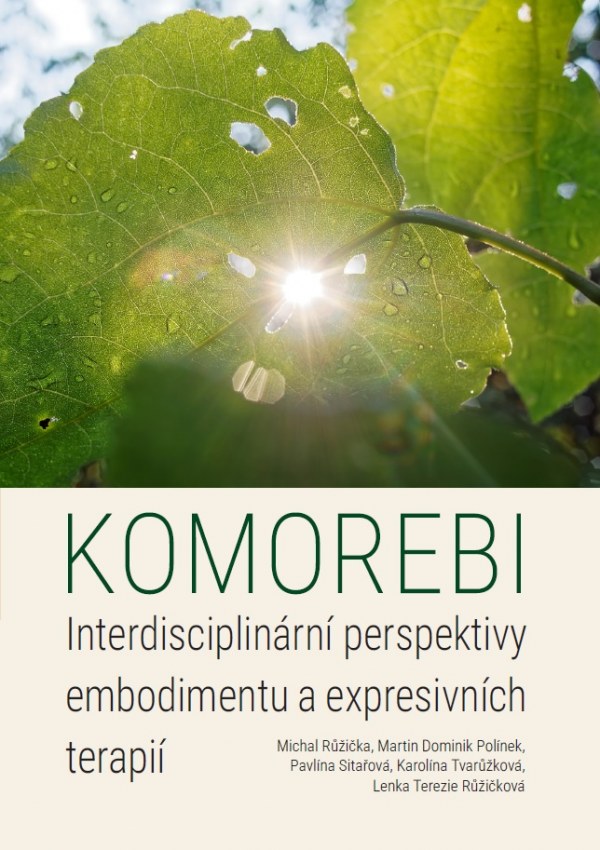
Komorebi: Interdisciplinární perspektivy embodimentu a expresivních terapií
- Martin Dominik Polínek, Michal Růžička, Lenka Terezie Růžičková, Pavlína Sitařová, Karolína Tvarůžková
Monografie je především metodologií, která seznamuje (nejen) speciální pedagogy a další terapeuty (interventy) s inovativními terapeutickými přístupy využitelnými ve speciálněpedagogické intervenci a terapii. Jedná se především o japonský systém komorebi a práci s tělem vycházející mimo jiné z metod plasticko-kognitivního stylu pohybu. Zaměřujeme se především na klienty s problémovým chováním, které vychází z jejich jinakosti.
1. vydání, Publikováno: 2025, online: 2025, vydavatel: Univerzita Palackého v Olomouci, Křížkovského 8, 771 47 Olomouc
 |  |  |  |
Reference
- Aizik-Reebs, A., Shoham, A., & Bernstein, A. (2021). First, do no harm: An intensive experience sampling study of adverse effects to mindfulness training. Behaviour Research and Therapy, 145, 103941. https://doi.org/10.1016/j.brat.2021.103941
 Přejít k původnímu zdroji...
 - Anālayo, B. (2019). The Insight Knowledge of Fear and Adverse Effects of Mindfulness Practices. Mindfulness, 10(10), 2172-2185. https://doi.org/10.1007/s12671-019-01198-4 Přejít k původnímu zdroji...
- Beaty, R. E., Seli, P., & Schacter, D. L. (2019). Network Neuroscience of Creative Cognition: Mapping Cognitive Mechanisms and Individual Differences in the Creative Brain. Current Opinion in Behavioral Sciences, 27, 22-30. https://doi.org/10.1016/j.cobeha.2018.08.013 Přejít k původnímu zdroji...
- Beerse, M. E., Van Lith, T., & Stanwood, G. (2020). Therapeutic psychological and biological responses to mindfulness-based art therapy. Stress and health : journal of the International Society for the Investigation of Stress, 36(4), 419-432. https://doi.org/10.1002/smi.2937 Přejít k původnímu zdroji...
- Berghs, M., Prick, A.-E. J. C., Vissers, C., & van Hooren, S. (2022). Drama Therapy for Children and Adolescents with Psychosocial Problems: A Systemic Review on Effects, Means, Therapeutic Attitude, and Supposed Mechanisms of Change. Children (Basel, Switzerland), 9(9), 1358. https://doi.org/10.3390/children9091358 Přejít k původnímu zdroji...
- Binda, D. D., Greco, C. M., & Morone, N. E. (2022). What Are Adverse Events in Mindfulness Meditation? Global Advances in Health and Medicine, 11, 2164957X221096640. https://doi.org/10.1177/2164957X221096640 Přejít k původnímu zdroji...
- Blanck, P., Perleth, S., Heidenreich, T., Kröger, P., Ditzen, B., Bents, H., & Mander, J. (2018). Effects of mindfulness exercises as stand-alone intervention on symptoms of anxiety and depression: Systematic review and meta-analysis. Behaviour Research and Therapy, 102, 25-35. https://doi.org/10.1016/j.brat.2017.12.002 Přejít k původnímu zdroji...
- Boggio, P. S., Giglio, A. C. A., Nakao, C. K., Wingenbach, T. S. H., Marques, L. M., Koller, S., & Gruber, J. (2020). Writing about gratitude increases emotion-regulation efficacy. The Journal of Positive Psychology, 15(6), 783-794. https://doi.org/10.1080/17439760.2019.1651893 Přejít k původnímu zdroji...
- Boldsen, S. (2022). Autism and the Sensory Disruption of Social Experience. Frontiers in Psychology, 13. https://doi.org/10.3389/fpsyg.2022.874268 Přejít k původnímu zdroji...
- Britton, W. B., Lindahl, J. R., Cooper, D. J., Canby, N. K., & Palitsky, R. (2021). Defining and measuring meditation-related adverse effects in mindfulness-based programs. Clinical Psychological Science: A Journal of the Association for Psychological Science, 9(6), 1185-1204. https://doi.org/10.1177/2167702621996340 Přejít k původnímu zdroji...
- Butler, J. D. (2012). Playing with madness: Developmental Transformations and the treatment of schizophrenia. The Arts in Psychotherapy, 39(2), 87-94. https://doi.org/10.1016/j.aip.2012.01.002 Přejít k původnímu zdroji...
- Calota, I. (2020). Playful workshop toolkit for professionals working with children. In Routledge International Handbook of Play, Therapeutic Play and Play Therapy. Routledge. Přejít k původnímu zdroji...
- Cebolla, A., Miragall, M., Palomo, P., Llorens, R., Soler, J., Demarzo, M., García-Campayo, J., & Baños, R. M. (2016). Embodiment and Body Awareness in Meditators. Mindfulness, 7(6), 1297-1305. https://doi.org/10.1007/s12671-016-0569-x Přejít k původnímu zdroji...
- Cimini, A. (2012). Vibrating Colors and Silent Bodies. Music, Sound and Silence in Maurice-Merleau-Ponty's Critique of Dualism. Contemporary Music Review, 31(5-6), 353-370. https://doi.org/10.1080/07494467.2012.759411 Přejít k původnímu zdroji...
- Crooks, A., & Mensinga, J. (2021). Body, Relationship, Space: Dance Movement Therapy as an Intervention in Embodied Social Work With Parents and Their Children. Australian Social Work, 74(2), 250-258. https://doi.org/10.1080/0312407X.2020.1861315 Přejít k původnímu zdroji...
- Daniel, S., Wimpory, D., Delafield-Butt, J. T., Malloch, S., Holck, U., Geretsegger, M., Tortora, S., Osborne, N., Schögler, B., Koch, S., Elias-Masiques, J., Howorth, M.-C., Dunbar, P., Swan, K., Rochat, M. J., Schlochtermeier, R., Forster, K., & Amos, P. (2022). Rhythmic Relating: Bidirectional Support for Social Timing in Autism Therapies. Frontiers in Psychology, 13. https://doi.org/10.3389/fpsyg.2022.793258 Přejít k původnímu zdroji...
- de Witte, M., Orkibi, H., Zarate, R., Karkou, V., Sajnani, N., Malhotra, B., Ho, R. T. H., Kaimal, G., Baker, F. A., & Koch, S. C. (2021). From Therapeutic Factors to Mechanisms of Change in the Creative Arts Therapies: A Scoping Review. Frontiers in Psychology, 12, 1-27. https://doi.org/10.3389/fpsyg.2021.678397 Přejít k původnímu zdroji...
- Dobkin, P. L. (2011). Mindfulness and Whole Person Care. In T. A. Hutchinson (Ed.), Whole Person Care: A New Paradigm for the 21st Century (s. 69-82). Springer. https://doi.org/10.1007/978-1-4419-9440-0_7 Přejít k původnímu zdroji...
- EADMT. (2010). What is Dance Movement Therapy (DMT)? EADMT. https://eadmt.com/what-is-dance-movement-therapy-dmt
- Ewais, T., Begun, J., Kenny, M., Rickett, K., Hay, K., Ajilchi, B., & Kisely, S. (2019). A systematic review and meta-analysis of mindfulness based interventions and yoga in inflammatory bowel disease. Journal of Psychosomatic Research, 116, 44-53. https://doi.org/10.1016/j.jpsychores.2018.11.010 Přejít k původnímu zdroji...
- Fink, A., & Benedek, M. (2013). The Creative Brain: Brain Correlates Underlying the Generation of Original Ideas. In O. Vartanian, A. S. Bristol, & J. C. Kaufman (Ed.), Neuroscience of Creativity (s. 0). The MIT Press. https://doi.org/10.7551/mitpress/9780262019583.003.0010 Přejít k původnímu zdroji...
- Fink, A., & Benedek, M. (2019). The Neuroscience of Creativity. Neuroforum, 25(4), 231-240. https://doi.org/10.1515/nf-2019-0006 Přejít k původnímu zdroji...
- Fuchs, T., & Schlimme, J. E. (2009). Embodiment and psychopathology: A phenomenological perspective. Current Opinion in Psychiatry, 22(6), 570-575. https://doi.org/10.1097/YCO.0b013e3283318e5c Přejít k původnímu zdroji...
- Gabbard, G. O. (2000). A neurobiologically informed perspective on psychotherapy. The British Journal of Psychiatry, 177(2), 117-122. https://doi.org/10.1192/bjp.177.2.117 Přejít k původnímu zdroji...
- González-Martín, A. M., Aibar-Almazán, A., Rivas-Campo, Y., Castellote-Caballero, Y., & Carcelén-Fraile, M. del C. (2023). Mindfulness to improve the mental health of university students. A systematic review and meta-analysis. Frontiers in Public Health, 11, 1284632. https://doi.org/10.3389/fpubh.2023.1284632 Přejít k původnímu zdroji...
- Grawe, K. (2007). Neuropsychoterapie: Nové přístupy k terapii na základě poznatků neurovědy (Vyd. 1). Portál.
- Hauke, G., & Kritikos, A. (2018). Embodiment in psychotherapy: A practitioner's guide. Springer. Přejít k původnímu zdroji...
- Holmwood, C. (2020). Neuro-Dramatic-Play and a hero's journey: A play-based approach in a UK junior school. In Routledge International Handbook of Play, Therapeutic Play and Play Therapy. Routledge. Přejít k původnímu zdroji...
- Holmwood, C. (2021). Older people, dementia and neuro-dramatic-play: A personal and theoretical drama therapy perspective. Drama Therapy Review, 7(Older Adults), 61-75. https://doi.org/10.1386/dtr_00061_1 Přejít k původnímu zdroji...
- Howard, S. J. (2016). Mindfulness may have risks as well as benefits. Journal of the Royal Society of Medicine, 109(7), 259. https://doi.org/10.1177/0141076816644113 Přejít k původnímu zdroji...
- Chodorow, J., Govine, B., Gould, S., & Verebes, A. (1999). Honoring and Remembering Trudi Schoop. American Journal of Dance Therapy, 21(2), 113-116. https://doi.org/10.1023/A:1022108704098 Přejít k původnímu zdroji...
- Chung, E., Cromby, J., Papadopoulos, D., & Tufarelli, C. (2016). Social epigenetics: A science of social science? The Sociological Review Monographs, 64(1), 168-185. https://doi.org/10.1002/2059-7932.12019 Přejít k původnímu zdroji...
- Jaenisch, R., & Bird, A. (2003). Epigenetic regulation of gene expression: How the genome integrates intrinsic and environmental signals. Nature Genetics, 33(3), 245-254. https://doi.org/10.1038/ng1089 Přejít k původnímu zdroji...
- Jennings, D. S., Lahad, P. M., & McCarthy, D. (2011). Healthy Attachments and Neuro-Dramatic-Play. Jessica Kingsley Publishers.
- Johnston, L. (2001). (Other) bodies and tourism studies. Annals of Tourism Research, 28(1), 180-201. https://doi.org/10.1016/S0160-7383(00)00012-8 Přejít k původnímu zdroji...
- Joly-Mascheroni, R., Abad-Hernando, S., Forster, B., & Calvo-Merino, B. (2021). Embodiment and Multisensory Perception of Synchronicity: Biological Features Modulate Visual and Tactile Multisensory Interaction in Simultaneity Judgements. https://doi.org/10.1163/22134808-bja10020 Přejít k původnímu zdroji...
- Kabat-Zinn, J. (2016). Život samá pohroma: Jak čelit stresu, nemoci a bolesti pomocí moudrosti těla a mysli (L. Válek, Přel.). Jan Melvil Publishing.
- Khalil, R., & Demarin, V. (2023). Creative therapy in health and disease: Inner vision. CNS Neuroscience & Therapeutics, 30(3), e14266. https://doi.org/10.1111/cns.14266 Přejít k původnímu zdroji...
- Koch, S., & Fischman, D. (2011). Embodied Enactive Dance/Movement Therapy. American Journal of Dance Therapy, 33, 57-72. https://doi.org/10.1007/s10465-011-9108-4 Přejít k původnímu zdroji...
- Koch, S., & Fuchs, T. (2011). Embodied arts therapies. Arts in Psychotherapy - ART PSYCHOTHER, 38, 276-280. https://doi.org/10.1016/j.aip.2011.08.007 Přejít k původnímu zdroji...
- Konopatsch, I., & Payne, H. (2012). Chapter 21. The emergence of body memory in Authentic Movement. In S. C. Koch, T. Fuchs, M. Summa, & C. Müller (Ed.), Body Memory, Metaphor and Movement (s. 341-352). John Benjamins Publishing Company. https://doi.org/10.1075/aicr.84.25kon Přejít k původnímu zdroji...
- Krieger, N. (2005). Embodiment: A conceptual glossary for epidemiology. Journal of Epidemiology & Community Health, 59(5), 350-355. https://doi.org/10.1136/jech.2004.024562 Přejít k původnímu zdroji...
- Kuhn, T. S. (1997). Struktura vědeckých revolucí (1. vyd). OIKOYMENH.
- Laban, J. de. (1974). Trudi Schoop with Peggy Mitchell. Won't You Join the Dance? A Dancer's Essay into the Treatment of Psychosis. Palo Alto: National Press Books, 1974, 194 pages, $8.95. Dance Research Journal, 6(2), 54-54. https://doi.org/10.1017/S058873560059085X Přejít k původnímu zdroji...
- Leder, D. (1984). Medicine and Paradigms of Embodiment. The Journal of Medicine and Philosophy: A Forum for Bioethics and Philosophy of Medicine, 9(1), 29-44. https://doi.org/10.1093/jmp/9.1.29 Přejít k původnímu zdroji...
- Lerner, R. M., & Benson, J. B. (2013). Chapter One - Introduction: Embodiment and Epigenesis: A View of the Issues. In R. M. Lerner & J. B. Benson (Ed.), Advances in Child Development and Behavior (Roč. 45, s. 1-20). JAI. https://doi.org/10.1016/B978-0-12-397946-9.00001-4 Přejít k původnímu zdroji...
- Martin, L. A. L., Koch, S. C., Hirjak, D., & Fuchs, T. (2016). Overcoming Disembodiment: The Effect of Movement Therapy on Negative Symptoms in Schizophrenia-A Multicenter Randomized Controlled Trial. Frontiers in Psychology, 7. https://doi.org/10.3389/fpsyg.2016.00483 Přejít k původnímu zdroji...
- McGowan, T., & Delafield-Butt, J. (2022). Narrative as co-regulation: A review of embodied narrative in infant development. Infant Behavior & Development, 68, 101747. https://doi.org/10.1016/j.infbeh.2022.101747 Přejít k původnímu zdroji...
- McLaughlin, D. (2017). Embodiment: A cross-disciplinary provocation. Connection Science, 29(1), 36-42. https://doi.org/10.1080/09540091.2017.1284760 Přejít k původnímu zdroji...
- Meier, B. P., Schnall, S., Schwarz, N., & Bargh, J. A. (2012). Embodiment in Social Psychology. Topics in Cognitive Science, 4(4), 705-716. https://doi.org/10.1111/j.1756-8765.2012.01212.x Přejít k původnímu zdroji...
- Mellgren, F. (1978). Augusto Boal's Theatre Of The Oppressed. Canadian Theatre Review, 19, 107-114. https://doi.org/10.3138/ctr.19.006 Přejít k původnímu zdroji...
- Meloni, M., & Reynolds, J. (2021). Thinking embodiment with genetics: Epigenetics and postgenomic biology in embodied cognition and enactivism. Synthese, 198(11), 10685-10708. https://doi.org/10.1007/s11229-020-02748-3 Přejít k původnímu zdroji...
- Merleau-Ponty, M. (2013). Fenomenologie vnímání. OIKOYMENH.
- Michalak, J., Burg, J., & Heidenreich, T. (2012). Don't Forget Your Body: Mindfulness, Embodiment, and the Treatment of Depression. Mindfulness, 3(3), 190-199. https://doi.org/10.1007/s12671-012-0107-4 Přejít k původnímu zdroji...
- Payne, H. (2017). The Psycho-neurology of Embodiment with Examples from Authentic Movement and Laban Movement Analysis. American Journal of Dance Therapy, 39(2), 163-178. https://doi.org/10.1007/s10465-017-9256-2 Přejít k původnímu zdroji...
- Pfeifer, R. (2001). Embodied Artificial Intelligence 10 Years Back, 10 Years Forward. In R. Wilhelm (Ed.), Informatics: 10 Years Back, 10 Years Ahead (s. 294-310). Springer. https://doi.org/10.1007/3-540-44577-3_21 Přejít k původnímu zdroji...
- Price, T. F., Peterson, C. K., & Harmon-Jones, E. (2012). The emotive neuroscience of embodiment. Motivation and Emotion, 36(1), 27-37. https://doi.org/10.1007/s11031-011-9258-1 Přejít k původnímu zdroji...
- Raffone, A., Tagini, A., & Srinivasan, N. (2010). Mindfulness and the Cognitive Neuroscience of Attention and Awareness. Zygon®, 45(3), 627-646. https://doi.org/10.1111/j.1467-9744.2010.01118.x Přejít k původnímu zdroji...
- Roemer, L., Williston, S. K., & Rollins, L. G. (2015). Mindfulness and emotion regulation. Current Opinion in Psychology, 3, 52-57. https://doi.org/10.1016/j.copsyc.2015.02.006 Přejít k původnímu zdroji...
- Salzberg, S. (2011). Mindfulness and loving-kindness. Contemporary Buddhism, 12(1), 177-182. https://doi.org/10.1080/14639947.2011.564837 Přejít k původnímu zdroji...
- Samaritter, R. (2009). The use of metaphors in dance movement therapy. Body, Movement and Dance in Psychotherapy, 4(1), 33-43. https://doi.org/10.1080/17432970802682274 Přejít k původnímu zdroji...
- Sandberg, L. S., & Busch, F. N. (2012). Psychotherapy and Pharmacotherapy: A Contemporary Perspective. Psychodynamic Psychiatry, 40(3), 505-532. https://doi.org/10.1521/pdps.2012.40.3.505 Přejít k původnímu zdroji...
- Schwind, J. K., McCay, E., Beanlands, H., Martin, L. S., Martin, J., & Binder, M. J. (2017). Mindfulness practice as a teaching-learning strategy in higher education: A qualitative exploratory pilot study. Nurse education today, 50, 92-96. https://doi.org/10.1016/j.nedt.2016.12.017 Přejít k původnímu zdroji...
- Tschacher, W. (2015). Implications of Embodiment. Andrews UK. https://search.ebscohost.com/login.aspx?direct=true&AuthType=ip,shib&db=e000xww&AN=1089297〈=cs&site=eds-live
- Tschacher, W., & Bergomi, C. (2011). The implications of embodiment: Cognition and communication.
- Tschacher, W., Giersch, A., & Friston, K. (2017). Embodiment and Schizophrenia: A Review of Implications and Applications. Schizophrenia Bulletin, 43(4), 745-753. https://doi.org/10.1093/schbul/sbw220 Přejít k původnímu zdroji...
- Tschacher, W., & Meier, D. (2023). Embodiment in psychotherapeutic communication. Psychotherapie, 68(1), 5-12. https://doi.org/10.1007/s00278-022-00616-8 Přejít k původnímu zdroji...
- Valenta, M. (2021). Dramaterapie (Vydání páté, v Portále první, přepracované a doplněné). Portál.
- Van Speybroeck, L. (2002). From epigenesis to epigenetics: The case of C. H. Waddington. Annals of the New York Academy of Sciences, 981, 61-81.Sup Přejít k původnímu zdroji...
- Vartanian, O., Bristol, A. S., & Kaufman, J. C. (Ed.). (2013). Neuroscience of Creativity. The MIT Press. https://doi.org/10.7551/mitpress/9780262019583.001.0001 Přejít k původnímu zdroji...
- Waggoner, M. R., & Uller, T. (2015). Epigenetic determinism in science and society. New Genetics and Society, 34(2), 177-195. https://doi.org/10.1080/14636778.2015.1033052 Přejít k původnímu zdroji...
- Witvliet, C. vanOyen, Richie, F. J., Root Luna, L. M., & Van Tongeren, D. R. (2019). Gratitude predicts hope and happiness: A two-study assessment of traits and states. The Journal of Positive Psychology, 14(3), 271-282. https://doi.org/10.1080/17439760.2018.1424924 Přejít k původnímu zdroji...
- Woolf, A. (2011). Healthy attachments and neuro-dramatic-play: By Sue Jennings, Jessica Kingsley Publishers, 2011, 271 pp., £18.99, ISBN 978 1 84905 014 2. Emotional and Behavioural Difficulties, 16(3), 327-328. https://doi.org/10.1080/13632752.2011.595099 Přejít k původnímu zdroji...
- Kabat-Zinn, J. (1994). Wherever You Go, There You Are: Mindfulness Meditation in Everyday Life. New York: Hyperion. ISBN 9780786880706.
- Bishop, S. R., et al. (2004). Mindfulness: A Proposed Operational Definition. Clinical Psyhology: Science and Practice, 11(3), 230-241. https://doi.org/10.1093/clipsy.bph077 Přejít k původnímu zdroji...
- Brown, K. W., & Ryan, R. M. (2003). The Benefits of Being Present: Mindfulness and its Role in Psychological Well-Being. Journal of Personality and Social Psychology, 84(4), 822-848. DOI: 10.1037/0022-3514.84.4.822 Přejít k původnímu zdroji...
- OpenAI. (2024). Odpovědi a textové výstupy vygenerované pomocí ChatGPT. OpenAI. 17. 10. 2024. Témata: podobné koncepty, Mindfulness v přírodě, důkazy o efektivitě konceptů.
- Shapiro, S. L., Carlson, L. E., Astin, J. A., & Freedman, B. (2006). Mechanisms of Mindfulness. Journal of Clinical Psychology, 62(3), 373-386. DOI: 10.1002/jclp.20237 Přejít k původnímu zdroji...
- Hayes, S. C., Strosahl, K. D., & Wilson, K. G. (1999). Acceptance and Commitment Therapy: An Experiential Approach to Behavior Change. New York: Guilford Press. ISBN 9781572304819.
- Hayes, S. C., et al. (2006) Acceptance and Commitment Therapy: Model, Processes and Outcomes. Behaviour Research and Therapy, 44(1), 1-25. https://doi.org/10.1016/j.brat.2005.06.006 Přejít k původnímu zdroji...
- Park, B. J., et al. (2010). The Physiological Effects of Shinrin-yoku (Taking in the Forest Atmosphere or Forest Bathing): Evidence From Field Experiments in 24 Forests Across Japan. Environmental Health and Preventive Medicine, 15(1), 18-26. https://doi.org/10.1007/s12199-009-0086-9 Přejít k původnímu zdroji...
- Clavel, G. (1969). Deperovo plastické divadlo. Scénografie, 4, 34-35.
- Drozd, D., Kačer, T., & Sparling, D. (2017). Theatre Theory Reader: Prague School Writings. Praha: Karolinum. ISBN 978-80-246-3578-1.
- Feldenkrais, M. (2023). Feldenkraisova metoda: pohybem k sebeuvědomění. Praha: Portál. ISBN 978-80-262-2086-2.
- Gronemeyer, A. (2004). Divadlo. Brno: Computer Press. ISBN 80-251-0208-4.
- Hickson, A. (2000). Dramatické a akční hry ve výchově, sociální práci a klinické praxi. Praha: Portál. ISBN 80-7178-387-0.
- Karásková, V., & Dluźewska-Martyniec, W. (2012). Pohybový program Veroniky Sherborne. Olomouc: Univerzita Palackého v Olomouci. ISBN 978-80-244-3141-3.
- Maslow, A. H. (2014). O psychologii bytí. Praha: Portál. ISBN 978-80-262-0618-7.
- Mackewn, J. (2004). Gestalt psychoterapie: moderní holistický přístup k psychoterapii. Praha: Portál. ISBN 80-7178-922-4.
- Müller, O., et al. (2014). Terapie ve speciální pedagogice. Praha: Grada. ISBN 978-80-247-4172-7.
- Nakonečný, M. (1998). Základy psychologie. Praha: Akademia. ISBN 80-200-0689-3.
- Payne, H. (1999). Kreativní pohyb a tanec ve výchově, sociální práci a klinické praxi. Praha: Portál. ISBN 80-7178-213-0.
- Perls, F. S. (1996). Gestalt terapie doslova. Olomouc: Votobia. ISBN 80-7198-115-X.
- Polínek, M. D. (2023). Aesthetics of creating an inklusive theater of actors with ASD as an intervention tool. Journal of Exceptional People, 23(12), 55-64. Přejít k původnímu zdroji...
- Polínek, M. D. (2014). Diagnosticko-saturační potenciál metod expresivních terapií v oblasti základních psychických potřeb = Diagnostic and Saturation Potential of the Methods of Expressive Therapies in the Area of Basic Psychological Needs. In Fiedlová, M., & Lečbych, M. Společný prostor 2014: [sborník příspěvků] = Common space 2014: [proceedings], 230-242. Olomouc: Univerzita Palackého v Olomouci. ISBN 978-80-244-4411-6.
- Polínek, M. D. (2024a). Fenomény plastického inkluzivního divadla herců s poruchami autistického spektra. Štúdie zo špeciálnej pedagogiky, 13(1), 110-119.
- Polínek, M. D. (2014). Gestaltdrama: zvýšení uvědomnění a základní psychické potřeby. In Jinakost ve speciálněpedagogickém kontextu: II. olomoucké speciálněpedagogické dny: sborník příspěvků z konference: XV. mezinárodní konference k problematice osob se specifickými potřebami: II. konference mladých vědeckých pracovníků: téma konference: interdisciplinární pohledy na jinakost, 153-159. Olomouc: Univerzita Palackého v Olomouci. ISBN 978-80-244-4290-7.
- Polínek, M. D. (2024b). Self-concept of assistants in inklusive theatre. Journal of Exceptional People, 2024(24), s. 77-88. ISSN 1805-4978.
- Polínek, M. D. (2020). Teatroterapeutické a skazkoterapeutické přístupy: pro literárně dramatické obory. Olomouc: Univerzita Palackého v Olomouci. ISBN 978-80-244-5748-2 Přejít k původnímu zdroji...
- Polínek, M. D. (2015). Tvořivost (nejen) jako prevence rizikového chování: expresivně-formativní potenciál základního uměleckého vzdělávání. Olomouc: Univerzita Palackého. ISBN 978-80-244-4842-8.
- Polínek, M. D., & Lipovský, D. (2019). Various Specifics of Theatrotherapeutic Intervention in Work with Client Diagnosed with Asperger Syndrome. Journal of Exceptional People, 15(2), 81-89.
- Polínek, M., & Růžička, M. (2013). Úvod do studia dramaterapie, teatroterapie, zážitkové pedagogiky a dramiky: učebnice pro specializované studium pro prevenci sociálně patologických jevů. Olomouc: P-Centrum. ISBN 978-80-905377-1-2.
- Roubal, J., & Vybíral, Z. (2010). Současná psychoterapie. Praha: Portál. ISBN 978-80-7367-682-7.
- Valenta, M. (2011). Dramaterapie. Praha: Grada. ISBN 978-80-247-3851-2.
- Zinker, J. (2004). Tvůrčí proces v Gestalt terapii. Brno: ERA. ISBN 80-86517-93-4.
- Афонин, C. Б. (2018). Особый театр как жизненный путь. Москва, ИД Городец. ISBN 978-5-906815-04-0.
- Вачков, И. В. (2011). Введение в сказкотерапию. Москва: Генезис. ISBN 978-5-98563-249-1
- Cакович, Н. А. (2007). Практика сказкотерапии. Cанкт-Петербург: Речь. ISBN 5-9268-0383-7.
- Черняева, C. А. (2007). Психотерапевтические сказки и игры. Cанкт-Петербург: Речь. ISBN 5-9268-0108-7.
- Попова, Н. Т. (2013). Актуальные проблемы психологической реабилитации лиц с ограниченными возможностями здоровья: сборник научных статей. Moskva: Московский городской психолого-педагогический университет. ISBN 978-5-94051-146-8.
- Попова, Н. Т. (2010). Пластико-когнитивный стиль движения. Москва: Круг. ISBN 978-5-4212-0030-7.
- Benson, H., Beary, J. F., & Carol, M. P. (1974). The relaxation response. Psychiatry, 37(1), 37-46. https://doi.org/10.1080/00332747.1974.11023785 Přejít k původnímu zdroji...
- Biasutti, M., & Habe, K. (2023). Teachers' perspectives on dance improvisation and flow. Research in Dance Education, 24(3), 242-261. https://doi.org/10.1080/14647893.2021.1940915 Přejít k původnímu zdroji...
- Deng, X., Lin, M., & Li, X. (2024). Mindfulness meditation enhances interbrain synchrony of adolescents when experiencing different emotions simultaneously. Cerebral Cortex, 34(1), bhad474. https://doi.org/10.1093/cercor/bhad474 Přejít k původnímu zdroji...
- Galvin, J. A., Benson, H., Deckro, G. R., Fricchione, G. L., & Dusek, J. A. (2006). The relaxation response: Reducing stress and improving cognition in healthy aging adults. Complementary Therapies in Clinical Practice, 12(3), 186-191. https://doi.org/10.1016/j.ctcp.2006.02.004 Přejít k původnímu zdroji...
- Gronau, Q. F., Van Erp, S., Heck, D. W., Cesario, J., Jonas, K. J., & Wagenmakers, E.-J. (2017). A Bayesian model-averaged meta-analysis of the power pose effect with informed and default priors: The case of felt power. Comprehensive Results in Social Psychology, 2(1), 123-138. https://doi.org/10.1080/23743603.2017.1326760 Přejít k původnímu zdroji...
- Gupta, J. (2024). Could Mindful Meditation be a Routine Therapeutic Intervention in Practice? Science Insights, 45(1), 1421-1423. https://doi.org/10.15354/si.24.co202 Přejít k původnímu zdroji...
- Hao, N., Xue, H., Yuan, H., Wang, Q., & Runco, M. A. (2017). Enhancing creativity: Proper body posture meets proper emotion. Acta Psychologica, 173, 32-40. https://doi.org/10.1016/j.actpsy.2016.12.005 Přejít k původnímu zdroji...
- Harmon-Jones, E., & Peterson, C. K. (2009). Supine Body Position Reduces Neural Response to Anger Evocation. Psychological Science, 20(10), 1209-1210. https://doi.org/10.1111/j.1467-9280.2009.02416.x Přejít k původnímu zdroji...
- Hashim, H. A., & Zainol, N. A. (2015). Changes in emotional distress, short term memory, and sustained attention following 6 and 12 sessions of progressive muscle relaxation training in 10-11 years old primary school children. Psychology, Health & Medicine, 20(5), 623-628. https://doi.org/10.1080/13548506.2014.1002851 Přejít k původnímu zdroji...
- Hefferon, K. M., & Ollis, S. (2006). 'Just clicks': An interpretive phenomenological analysis of professional dancers' experience of flow. Research in Dance Education, 7(2), 141-159. https://doi.org/10.1080/14647890601029527 Přejít k původnímu zdroji...
- Hennig, J., Friebe, J., Ryl, I., Krämer, B., Böttcher, J., & Netter, P. (2000). Upright posture influences salivary cortisol. Psychoneuroendocrinology, 25(1), 69-83. https://doi.org/10.1016/S0306-4530(99)00037-2 Přejít k původnímu zdroji...
- Cho, K. (2024). Mindful Meditation: A Potential Effective Therapeutic in Clinical Practice. Science Insights, 45(1), 1431-1437. https://doi.org/10.15354/si.24.re1026 Přejít k původnímu zdroji...
- Jaque, S. V., Thomson, P., Zaragoza, J., Werner, F., Podeszwa, J., & Jacobs, K. (2020). Creative Flow and Physiologic States in Dancers During Performance. Frontiers in Psychology, 11, 1000. https://doi.org/10.3389/fpsyg.2020.01000 Přejít k původnímu zdroji...
- Laird, K. T., Vergeer, I., Hennelly, S. E., & Siddarth, P. (2021). Conscious dance: Perceived benefits and psychological well-being of participants. Complementary Therapies in Clinical Practice, 44, 101440. https://doi.org/10.1016/j.ctcp.2021.101440 Přejít k původnímu zdroji...
- Levit, D. (2022). Somatic Experiencing: Enhancing Psychoanalytic Holding for Trauma and Catastrophic Dissociation - Contending with the Flood and the Fog. Psychoanalytic Dialogues, 32(3), 235-252. https://doi.org/10.1080/10481885.2022.2058325 Přejít k původnímu zdroji...
- Łucznik, K., & May, J. (2021). Measuring individual and group flow in collaborative improvisational dance. Thinking Skills and Creativity, 40, 100847. https://doi.org/10.1016/j.tsc.2021.100847 Přejít k původnímu zdroji...
- Majore-Dusele, I., Karkou, V., & Millere, I. (2021). The Development of Mindful-Based Dance Movement Therapy Intervention for Chronic Pain: A Pilot Study With Chronic Headache Patients. Frontiers in Psychology, 12. https://doi.org/10.3389/fpsyg.2021.587923 Přejít k původnímu zdroji...
- Mannion, N. E., & Levine, B. A. (1984). Effects of stimulus representation and cue category level on exposure (flooding) therapy. British Journal of Clinical Psychology, 23(1), 1-7. https://doi.org/10.1111/j.2044-8260.1984.tb00620.x Přejít k původnímu zdroji...
- Marich, J., & Howell, T. (2015). Dancing Mindfulness: A Phenomenological Investigation of the Emerging Practice. EXPLORE, 11(5), 346-356. https://doi.org/10.1016/j.explore.2015.07.001 Přejít k původnímu zdroji...
- Metzler, H., & Grèzes, J. (2019). Repeatedly adopting power postures does not affect hormonal correlates of dominance and affiliative behavior. PeerJ, 7, e6726. https://doi.org/10.7717/peerj.6726 Přejít k původnímu zdroji...
- Mihaly Csikszentmihalyi. (2015). Flow-O štěstí a smyslu života (První). Portál. Přejít k původnímu zdroji...
- Minvaleev, R. S., Nozdrachev, A. D., Kir'yanova, V. V., & Ivanov, A. I. (2004). Postural Influences on the Hormone Level in Healthy Subjects: I. The Cobra Posture and Steroid Hormones. Human Physiology, 30(4), 452-456. https://doi.org/10.1023/B:HUMP.0000036341.80214.28 Přejít k původnímu zdroji...
- Panebianco-Warrens, C. (2014). Exploring the dimensions of flow and the role of music in professional ballet dancers. Muziki, 11(2), 58-78. https://doi.org/10.1080/18125980.2014.966480 Přejít k původnímu zdroji...
- Payne, H., Tantia, J., Koch, S., & Fuchs, T. (2019). The Routledge International handbook of Embodied Perspectives in Psychotherapy. Routledge Taylor and Francis Group. Přejít k původnímu zdroji...
- Perls, F. S., Hefferline, R. F., & Goodman, P. (2020). Gestalt terapie: Vzrušení a růst lidské osobnosti (A. Polák, Přel.; 2., upravené vydání). Stanislav Juhaňák - Triton.
- Schumacher, S., Miller, R., Fehm, L., Kirschbaum, C., Fydrich, T., & Ströhle, A. (2015). Therapists' and patients' stress responses during graduated versus flooding in vivo exposure in the treatment of specific phobia: A preliminary observational study. Psychiatry Research, 230(2), 668-675. https://doi.org/10.1016/j.psychres.2015.10.020 Přejít k původnímu zdroji...
- Silove, D. (1992). Psychotherapy and trauma. Current Opinion in Psychiatry, 5(3), 370. Přejít k původnímu zdroji...
- Van Cappellen, P., Ladd, K. L., Cassidy, S., Edwards, M. E., & Fredrickson, B. L. (2022). Bodily feedback: Expansive and upward posture facilitates the experience of positive affect. Cognition and Emotion, 36(7), 1327-1342. https://doi.org/10.1080/02699931.2022.2106945 Přejít k původnímu zdroji...
- Van der Kolk, B. A. (2021). Tělo sčítá rány: Jak trauma dopadá na naši mysl i zdraví a jak se z něj léčit.
- Wei, Y. (2024). The Effect of Mindfulness Practice on Individual Mental Resilience and Happiness. International Journal of Education and Humanities, 16(2), Article 2. https://doi.org/10.54097/mwg9g688 Přejít k původnímu zdroji...
- Zinker, J. C. (2004). Tvůrčí proces v Gestalt terapii. ERA.
- Ajzen, I., & Fishbein, M. (1980). Understanding Attitudes and Predicting Social Behavior. Prentice Hall.
- Ausubel, D. P. (1968). Educational Psychology: A Cognitive View. Holt, Rinehart & Winston.
- Bandura, A. (1977). Social Learning Theory. Prentice Hall.
- Barnett, S. M., & Ceci, S. J. (2002). When and where do we apply what we learn?: A taxonomy for far transfer. Psychological Bulletin, 128(4), 612-637. https://doi.org/10.1037/0033-2909.128.4.612 Přejít k původnímu zdroji...
- Barsalou, L. W. (2008). Grounded cognition. Annual Review of Psychology, 59, 617-645. https://doi.org/10.1146/annurev.psych.59.103006.093639 Přejít k původnímu zdroji...
- Beck, J. S. (2011). Cognitive Behavioral Therapy: Basics and Beyond. Guilford Press.
- Black, P., & Wiliam, D. (1998). Assessment and classroom learning. Assessment in Education: Principles, Policy & Practice, 5(1), 7-74. https://doi.org/10.1080/0969595980050102 Přejít k původnímu zdroji...
- Boaler, J. (2016). Mathematical mindsets: Unleashing students' potential through creative math, inspiring messages and innovative teaching. Jossey-Bass.
- Bohart, A. C., & Greenberg, L. S. (Eds.). (1997). Empathy reconsidered: New directions in psychotherapy. American Psychological Association. https://doi.org/10.1037/10226-000 Přejít k původnímu zdroji...
- Burlingame, G. M., Whitcomb, K. E., Woodland, S. C., Olsen, J. A., Beecher, M., & Gleave, R. (2018). The effects of relationship and progress feedback in group psychotherapy using the Group Questionnaire and Outcome Questionnaire-45: A randomized clinical trial. Psychotherapy, 55(2), 116-131. https://doi.org/10.1037/pst0000133 Přejít k původnímu zdroji...
- Collaborative for Academic, Social, and Emotional Learning (CASEL). (2020). What is SEL?. CASEL. https://casel.org/what-is-sel/
- Corey, G. (2016). Theory and Practice of Group Counseling. Cengage Learning.
- Costa, A. C., & Abreu, M. V. (2018). Writing as a therapy. Psychologica, 61(1), 57-74. https://doi.org/10.14195/1647-8606_61-1_4 Přejít k původnímu zdroji...
- DeAngelis, T. (2019, November 1). Better relationships with patients lead to better outcomes. Monitor on Psychology, 50(10). https://www.apa.org/monitor/2019/11/ce-corner-relationships
- Deci, E. L., & Ryan, R. M. (2000). The "what" and "why" of goal pursuits: Human needs and the self-determination of behavior. Psychological Inquiry, 11(4), 227-268. https://doi.org/10.1207/S15327965PLI1104_01 Přejít k původnímu zdroji...
- Forsyth, D. R. (2018). Group Dynamics. Cengage Learning.
- Frans, E. (2015). A practical guide to holistic sexuality education. In Evidence-Based Approaches to Sexuality Education (pp. 76-100). Routledge. Přejít k původnímu zdroji...
- Freeman, S., Eddy, S. L., McDonough, M., Smith, M. K., Okoroafor, N., Jordt, H., & Wenderoth, M. P. (2014). Active learning increases student performance in science, engineering, and mathematics. Proceedings of the National Academy of Sciences, 111(23), 8410-8415. https://doi.org/10.1073/pnas.1319030111 Přejít k původnímu zdroji...
- Freud, S. (1914). On the history of the psycho-analytic movement. Hogarth Press.
- Gallese, V., & Lakoff, G. (2005). The brain's concepts: The role of the sensory-motor system in conceptual knowledge. Cognitive Neuropsychology, 22(3-4), 455-479. https://doi.org/10.1080/02643290442000310 Přejít k původnímu zdroji...
- Gonçalves, M. M., Matos, M., & Santos, A. (2009). Narrative therapy and the nature of "innovative moments" in the construction of change. Journal of Constructivist Psychology, 22(1), 1-23. https://doi.org/10.1080/10720530802500748 Přejít k původnímu zdroji...
- Hattie, J., & Donoghue, G. (2016). Learning strategies: A synthesis and conceptual model. Nature Partner Journals: Science of Learning, 1(1), 1-13. https://doi.org/10.1038/npjscilearn.2016.13 Přejít k původnímu zdroji...
- Johnson, D. W., & Johnson, R. T. (2013). Cooperative, competitive, and individualistic learning environments. In International guide to student achievement (pp. 372-374). Routledge.
- Jones, P. (2015). The arts therapies: A revolution in healthcare. Routledge
- Joyce, B., & Weil, M. (2003). Models of Teaching. Allyn & Bacon.
- Knowles, M. S. (1975). Self-Directed Learning: A Guide for Learners and Teachers. Association Press.
- Kovalik, S. J., & McGeehan, J. R. (2013). Integrated thematic instruction: From brain research to application. In Instructional-design theories and models (pp. 371-396). Routledge. Přejít k původnímu zdroji...
- Ladousse, G. P. (1987). Role Play. Oxford University Press.
- LeDoux, J. E. (1996). The Emotional Brain: The Mysterious Underpinnings of Emotional Life. Simon & Schuster.
- Lewin, K. (1951). Field theory in social science: Selected theoretical papers. Harper & Row.
- Lištiaková, I., Valenta, M. (2015). Evaluace v dramaterapii. Univerzita Palackého v Olomouci.
- Malchiodi, C. A. (2005). Expressive therapies. Guilford Press.
- McCabe, J. A., Osha, K. L., Roche, J. A., & Susser, J. A. (2013). Psychology students' knowledge and use of mnemonics. Teaching of psychology, 40(3), 183-192. https://doi.org/10.1177/009862831348746 Přejít k původnímu zdroji...
- Moon, J. A. (2004). A Handbook of Reflective and Experiential Learning: Theory and Practice. Routledge.
- Morris, T. H. (2019a). Adaptivity through self-directed learning to meet the challenges of our ever-changing world. Adult Learning, 30(2), 56-66. https://doi.org/10.1177/1045159518814486 Přejít k původnímu zdroji...
- Morris, T. H. (2019b). Self-directed learning: A fundamental competence in a rapidly changing world. International Review of Education, 65(4), 633-653. http://dx.doi.org/10.1007/s11159-019-09793-2 Přejít k původnímu zdroji...
- Norcross, J. C., & Lambert, M. J. (2018). Psychotherapy relationships that work III.Psychotherapy, 55(4), 303-315. https://doi.org/10.1037/pst0000193 Přejít k původnímu zdroji...
- Norton, P. J., & Price, E. C. (2007). A meta-analytic review of adult cognitive-behavioral treatment outcome across the anxiety disorders. Journal of Nervous and Mental Disease, 195(6), 521-531. https://doi.org/10.1097/01.nmd.0000253843.70149.9a Přejít k původnímu zdroji...
- Novak, J. D., & Cañas, A. J. (2008). The Theory Underlying Concept Maps and How to Construct and Use Them. Florida Institute for Human and Machine Cognition.
- Pashler, H., McDaniel, M., Rohrer, D., & Bjork, R. (2008). Learning styles: Concepts and evidence. Psychological Science in the Public Interest, 9(3), 1050150119. https://doi.org/10.1111/j.1539-6053.2009.01038 Přejít k původnímu zdroji...
- Pešek, M. R. (2010). Metoda sebeznehodnocujícího a sebepovzbuzujícího dopisu v KBT. Psychiatrie pro praxi, 11(5-6), 194-196. https://www.psychiatriepropraxi.cz/pdfs/psy/2010/04/09.pdf
- Petty, R. E., & Cacioppo, J. T. (1986). Communication and Persuasion: Central and Peripheral Routes to Attitude Change. Springer. Přejít k původnímu zdroji...
- Piaget, J. (1977). The development of thought: Equilibration of cognitive structures. Viking Press.
- Prochaska, J. O., & DiClemente, C. C. (1982). Transtheoretical therapy: Toward a more integrative model of change. Psychotherapy: Theory, Research & Practice, 19(3), 276-288. https://doi.org/10.1037/h0088437 Přejít k původnímu zdroji...
- Raelin, J. A. (2016). Imagine there are no leaders: Reframing leadership as collaborative agency. Leadership, 12(2), 131-158. https://doi.org/10.1177/1742715014558076 Přejít k původnímu zdroji...
- Reeve, J. (2002). Self-determination theory applied to educational settings. In E. L. Deci & R. M. Ryan (Eds.), Handbook of Self-Determination Research (pp. 183-203). University of Rochester Press.
- Riley, S. (2001). Group process made visible: Group art therapy. Brunner-Routledge.
- Rogers, C. R. (1957). The necessary and sufficient conditions of therapeutic personality change. Journal of Consulting Psychology, 21(2), 95-103. https://doi.org/10.1037/h0045357 Přejít k původnímu zdroji...
- Rogers, N. (1993). The Creative Connection: Expressive Arts as Healing. Science and Behavior Books.
- Ryan, R. M., & Deci, E. L. (2002). Overview of self-determination theory: An organismic dialectical perspective. In E. L. Deci & R. M. Ryan (Eds.), Handbook of Self-Determination Research (pp. 3-33). University of Rochester Press.
- Säljö, R. (2010). Digital tools and challenges to institutional traditions of learning: technologies, social memory and the performative nature of learning. Journal of computer assisted learning, 26(1), 53-64. https://doi.org/10.1111/j.1365-2729.2009.00341.x Přejít k původnímu zdroji...
- Schön, D. A. (1987). Educating the Reflective Practitioner. Jossey-Bass.
- Schunk, D. H. (1987). Peer models and children's behavioral change. Review of Educational Research, 57(2), 149-174. https://doi.org/10.3102/0034654305700214 Přejít k původnímu zdroji...
- Schwabe, L., & Wolf, O. T. (2010). Learning under stress impairs memory formation. Neurobiology of learning and memory, 93(2), 183-188. https://doi.org/10.1016/j.nlm.2009.09.009 Přejít k původnímu zdroji...
- Slavin, R. E. (2014). Cooperative Learning and Academic Achievement: Why Does Groupwork Work? Anales de Psicología, 30(3), 785-791. https://doi.org/10.6018/analesps.30.3.201201 Přejít k původnímu zdroji...
- Sweller, J. (1988). Cognitive Load During Problem Solving: Effects on Learning. Cognitive Science. Přejít k původnímu zdroji...
- Tomlinson, C. A. (2014). The Differentiated Classroom: Responding to the Needs of All Learners. ASCD. https://files.ascd.org/staticfiles/ascd/pdf/siteASCD/publications/books/differentiated-classroom2nd-sample-chapters.pdf
- Tuckman, B. W. (1965). Developmental sequence in small groups. Psychological Bulletin, 63(6), 384-399. https://doi.org/10.1037/h0022100 Přejít k původnímu zdroji...
- Wampold, B. E., & Imel, Z. E. (2015). The great psychotherapy debate: The evidence for what makes psychotherapy work(2nd ed.). Routledge. https://doi.org/10.4324/9780203582015 Přejít k původnímu zdroji...
- Wilson, M. (2002). Six views of embodied cognition. Psychonomic Bulletin & Review, 9(4), 625-636. https://doi.org/10.3758/BF03196322 Přejít k původnímu zdroji...
- Yalom, I. D. (2002). The Gift of Therapy: An Open Letter to a New Generation of Therapists and Their Patients. HarperCollins.
- Yalom, I. D., & Leszcz, M. (2020). The Theory and Practice of Group Psychotherapy. Basic Books.
- Brooks, A. (2020). Interactive multisensory vibroacoustic therapeutic intervention (iMVATi). In Recent Advances in Technologies for Inclusive Well-Being (Vol. 196, pp. 325-342). https://doi.org/10.1007/978-3-030-59608-8_17 Přejít k původnímu zdroji...
- Carvalho, S. C., Martins, F. S., Martins, A. N., Barbosa, R. C., & Vicente, S. G. (2024). Effectiveness of Snoezelen in older adults with neurocognitive and other pathologies: A systematic review of the literature. Journal of Neuropsychology, 18(2), 312-331. https://doi.org/10.1002/jnp.12115 Přejít k původnímu zdroji...
- Cox, H., Burns, I., & Savage, S. (2004). Multisensory environments for leisure: Promoting well-being in nursing home residents with dementia. Journal of Gerontological Nursing, 30(2), 37-45. https://doi.org/10.3928/0098-9134-20040201-08 Přejít k původnímu zdroji...
- De Luca, R., Lauria, P., Bonanno, M., et al. (2023). Neurophysiological and psychometric outcomes in minimal consciousness state after advanced audio-video emotional stimulation: A retrospective study. Brain Sciences, 13(12), 1619. https://doi.org/10.3390/brainsci13121619 Přejít k původnímu zdroji...
- Di Taranto, C., Procenesi, L., Paterniti, A. M., Loppi, E., Speranza, A. R., Siracusano, A., & Niolu, C. (2022). Outcome of the use of the Snoezelen multisensory room in an alexithymic patient: A case report. Rivista di Psichiatria, 57(3), 134-140. https://doi.org/10.1708/3814.37992 Přejít k původnímu zdroji...
- Farias, A. G., Araújo, W. de S., Leite, M. de M. B., Sales, M. de S., Ribeiro, A. E. G., Souza, E. N. de, Grangeiro, L. L., Sampaio, T. T., & Sampaio, T. M. T. (2022). Terapia Snoezelen no tratamento do transtorno do espectro do autismo: Uma revisão narrativa / Snoezelen therapy in the treatment of autism spectrum disorder: A narrative review. Brazilian Journal of Health Review, 5(2), 4403-4412. https://doi.org/10.34119/bjhrv5n2-034 Přejít k původnímu zdroji...
- Filatova, R., & Janků, K. (2010). Snoezelen. [Frýdek-Místek]: Tiskárna Kleinwächter. ISBN 978-80-260-0115-7.
- Filatova, R. Snoezelen-MSE. (2014). Kleinwächter Josef. ISBN 978-80-905419-3-1.
- Grünerová-Lippertová, M. (2020). Multisenzorická stimulace. Praha: Galén. ISBN 978-80-7492-447-7.
- Helbling, M., Grandjean, M.-L., & Srinivasan, M. (2024). Effects of multisensory environment/stimulation therapy on adults with cognitive impairment and/or special needs: A systematic review and meta-analysis. Special Care in Dentistry, 44(2), 381-420. https://doi.org/10.1111/scd.12906 Přejít k původnímu zdroji...
- Hogg, J., Cavet, J., Lambe, L., & Smeddle, M. (2001). The use of 'Snoezelen' as multisensory stimulation with people with intellectual disabilities: A review of the research. Research in Developmental Disabilities, 22(5), 353-372. https://doi.org/10.1016/S0891-4222(01)00077-4 Přejít k původnímu zdroji...
- Chitsey, A. M., Haight, B., & Jones, M. M. (2002). Snoezelen: a multisensory environmental intervention. Journal of Gerontological Nursing, 28(3), 41-49. https://doi.org/10.3928/0098-9134-20020301-09 Přejít k původnímu zdroji...
- Chung, J., Lai, C., Chung, P. M., & French, H. (2002). Snoezelen for dementia. The Cochrane Database of Systematic Reviews, 4, CD003152. https://doi.org/10.1002/14651858.CD003152 Přejít k původnímu zdroji...
- International Snoezelen Association for Multi-Sensory Environments (ISNA-MSE). (2010). MSE/Snoezelen - Basic function and principles. ISNA Position Paper. Retrieved from https://isna-mse.org
- International Snoezelen Association for Multi-Sensory Environments (ISNA-MSE). (2023). Snoezelen and Multi-Sensory Environments. Retrieved from https://isna-mse.org
- Janků, K. (2018). Snoezelen v teorii, v praxi a ve výzkumu. Vydání: první. Opava: Slezská univerzita, Fakulta veřejných politik v Opavě. ISBN 978-80-7510-335-2.
- Leahy, R. (2002). A model of emotional schemas. Cognitive and Behavioral Practice, 9(3), 177-190. https://doi.org/10.1016/S1077-7229(02)80048-7 Přejít k původnímu zdroji...
- Lotan, M., & Gold, C. (2009). Meta-analysis of the effectiveness of multisensory stimulation environments for people with intellectual disabilities. Journal of Intellectual & Developmental Disability, 34(3), 207-215. https://doi.org/10.1080/13668250903080106 Přejít k původnímu zdroji...
- Maseda, A., Cibeira, N., Lorenzo-López, L., González-Abraldes, I., Buján, A., de Labra, C., & Millán-Calenti, J. (2018). Multisensory stimulation and individualized music sessions on older adults with severe dementia: Effects on mood, behavior, and biomedical parameters. Journal of Alzheimer's Disease, 63(4), 1415-1425. https://doi.org/10.3233/JAD-180109 Přejít k původnímu zdroji...
- Mauricio, B. Z. B., & Novelli, M. (2023). Domestic environment of multisensory stimulation based on Snoezelen principles pilot study. Alzheimer's & Dementia, 19(S19), e075073. https://doi.org/10.1002/alz.075073 Přejít k původnímu zdroji...
- Nordin, S., Miskam, H., Togimin, S. H., & Zainal, M. S. (2020). The use of Snoezelen box in handling challenging behaviors learning disabilities students in the classroom. Proceedings of the 3rd Global Conference on Special Education (GCS 2020), 396-404.
- Price, C. (2005). Body-oriented therapy in recovery from child sexual abuse: An efficacy study. Alternative Therapies in Health and Medicine, 11(5), 46-57.
- Russo-Ponsaran, N. M., Evans-Smith, B., Johnson, J. K., Russo, J. M., & McKown, C. (2016). Efficacy of a facial emotion training program for children and adolescents with autism spectrum disorders. Journal of Nonverbal Behavior, 40, 13-38. https://doi.org/10.1007/S10919-015-0217-5 Přejít k původnímu zdroji...
- Salas, J. (1990). Aesthetic Experience in Music Therapy. Music Therapy, 9(1), 1-15. https://doi.org/10.1093/MT/9.1.1 Přejít k původnímu zdroji...
- Schofield, P., & Payne, S. (2003). A pilot study into the use of a multisensory environment (Snoezelen) within a palliative day-care setting. International Journal of Palliative Nursing, 9(3), 124-130. https://doi.org/10.12968/ijpn.2003.9.3.11485 Přejít k původnímu zdroji...
- Teitelbaum, A., Volpo, S., Paran, R., Zislin, J., Drumer, D., Raskin, S., Katz, G., Shlafman, M., Gaber, A., & Durst, R. (2007). [Multisensory environmental intervention (Snoezelen) as a preventive alternative to seclusion and restraint in closed psychiatric wards]. Harefuah, 146(1), 11-14, 79-80.
- Terry, P. A., & Hong, C. S. (1998). People with learning disabilities and multisensory environments. British Journal of Therapy and Rehabilitation, 5(12), 630-633. https://doi.org/10.12968/BJTR.1998.5.12.14158 Přejít k původnímu zdroji...
- Unwin, K. L., Powell, S. D., Jones, C. R. G., & Moss, T. (2021). The use of Multi-Sensory Environments with autistic children. Autism, 25(6), 1576-1589. https://doi.org/10.1177/13623613211050176 Přejít k původnímu zdroji...
- Vermes, K. (2011). Intersensory and intersubjective attunement: Philosophical approach to a central element of dance movement psychotherapy. Body, Movement and Dance in Psychotherapy, 6(1), 31-42. https://doi.org/10.1080/17432979.2010.533823 Přejít k původnímu zdroji...
- Wu, J., Chen, K., Ma, Y., & Vomočilová, J. (2020). Early intervention for children with intellectual and developmental disability using drama therapy techniques. Children and Youth Services Review, 109, 104689. https://doi.org/10.1016/j.childyouth.2019.104689 Přejít k původnímu zdroji...
- Zubenschi, E. (2022). Terapia Snoezelen în recuperarea copiilor cu dizabilități. Probleme ale Științelor Socioumanistice și Modernizării Învățământului, 24(1), 213-223. https://doi.org/10.46728/c.v1.25-03-2022.p213-223 Přejít k původnímu zdroji...